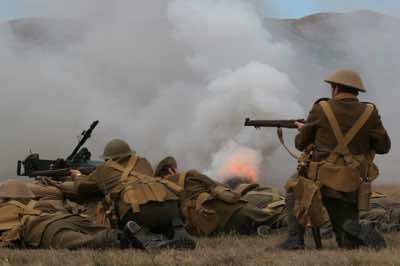
Kiwi Troops Win A Significant WW1 Battle Using Medieval Tactics

From mid-1915 until early-1916 Germany had enjoyed a period of air superiority over the Allies on the Western Front, primarily due to the introduction of the Fokker Eindecker monoplane which was fitted with a synchronised machine gun firing through the propellor arc. This was a substantial technological improvement in aircraft design which led to many victories over the slower, less well armed Allied aircraft. However, by early 1916 the Allies were starting to deploy the new, Airco D.H.2 and Nieuport N.11 fighters, which began to tip the balance of power back in their favour once again.

The Vintage Aviator Collection also includes several of the later model Albatros D.Va fighters, two of which are also featured in this video.
1. Try to secure advantages before attacking. If possible, keep the sun behind you.2. Always carry through an attack when you've started it.
3. Fire only at close range, and only when your opponent is properly in your sights.
4. Always keep your eye on your opponent, and never let yourself be deceived by ruses.
5. In any form of attack it is essential to assail your enemy from behind.
6. If your opponent dives on you, don't try to evade his onslaught, but fly to meet it.
7. When over the enemy's lines, never forget your own line of retreat.
8. For the squadron: Attack in groups of four or six and when the fight breaks up into a series of single combats, take care that several do not go for the same opponent.
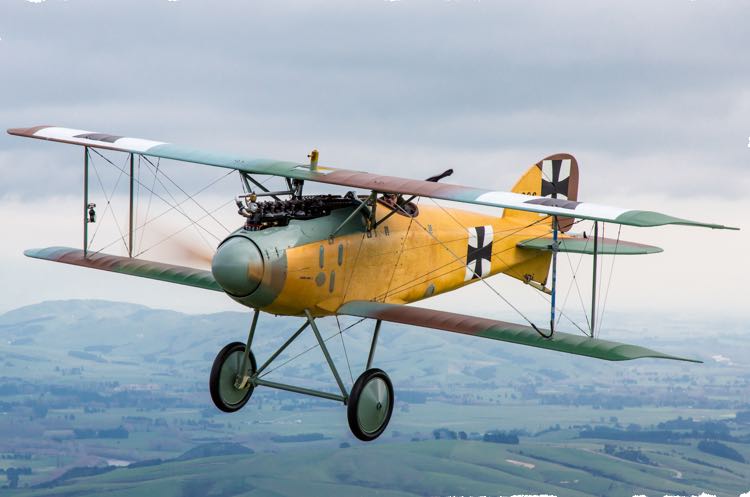
Albatros D.II in the colours of Oswald Boelcke's aircraft. Photo © Alex Mitchell, Historical Aviation Film Unit
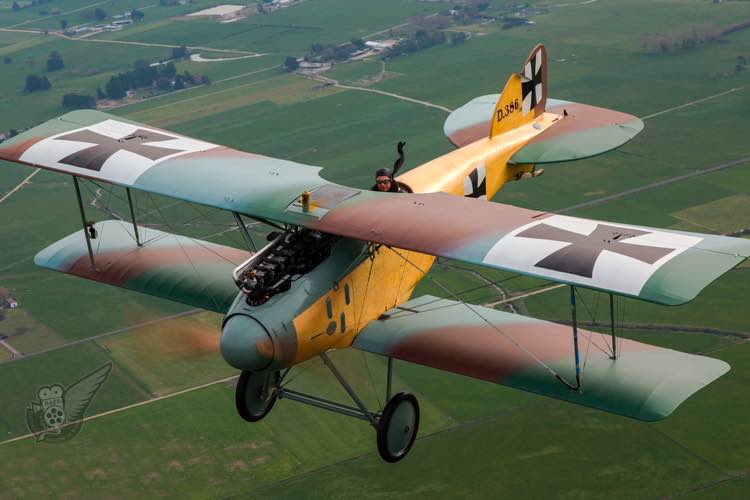
As seen from above the Albatros D.II is a standard biplane with wings of eagle width, where-as the later D.III and D.V models were sesquiplanes, with a narrower lower wing. Photo © Alex Mitchell, Historical Aviation Film Unit
Germany's highest scoring ace had been defeated, not by the Allies, but by a lack of adherence to basic safety principles. Despite his short career, the legacy of Boelcke's contributions to the tactics of aerial warfare cemented his place as one of the most influential fighter pilots of World War I.
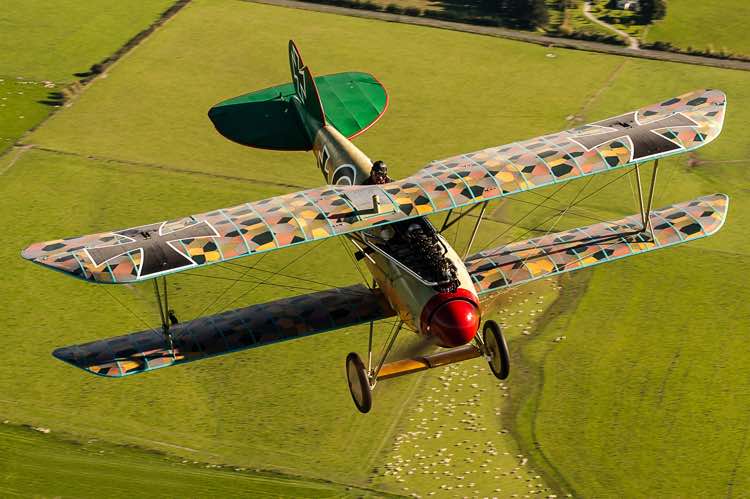
The later Albatros D.V (and D.III) featured lower wings that were narrower than the upper wing, and only featured a single spar instead of the two in the upper wing. This meant that the lower wing was more susceptible to warping when under high pressure (speed). Photo © Alex Mitchell, Historical Aviation Film Unit
Albatros D.III
The Albatross D.III was developed as a successor to the D.II. in late 1916, addressing some of the shortcomings of the earlier models and incorporating lessons learned from front-line combat. One of the major changes was the adoption of a sesquiplane design, inspired by the French Newport 11, with a single-spar lower wing that was narrower than the upper wing. This design improved the aircraft's maneuverability and climb rate, making it effective in dogfights. However, the D.III suffered from structural problems with its lower wing, which was prone to failure during high-stress maneuvers. Despite these issues, the D.III became the primary fighter for the German Air Service during 1917 and was flown by many of Germany's top aces, including Manfred von Richthofen.
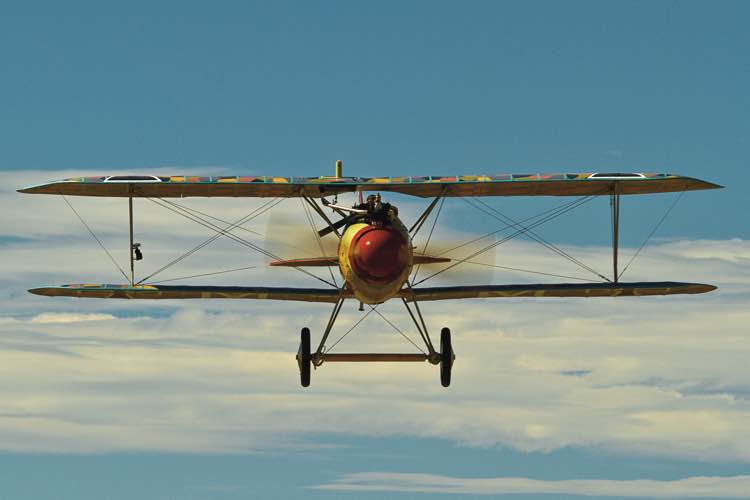
This head on image of the Albatros D.Va highlights its more rounded fuselage profile, compared with the flat 'slab' sides of the Albatros D.II. Photo © Alex Mitchell, Historical Aviation Film Unit
The Albatros D.V, introduced in mid-1917, was intended to be a refined version of the D.III with a more streamlined fuselage and minor changes to improve its performance. Unfortunately, the D.V inherited many of the structural weaknesses of its predecessor, particularly the fragility of its lower wing, and while the D.V was slightly faster and offered better handling characteristics at higher altitudes, it did not provide the significant performance leap that was expected. Pilots continued to express concerns about the aircraft's durability, and it was eventually outclassed by newer Allied designs. Despite its flaws, the D.V remained in service until 1918 due to production delays in developing more advanced German aircraft.
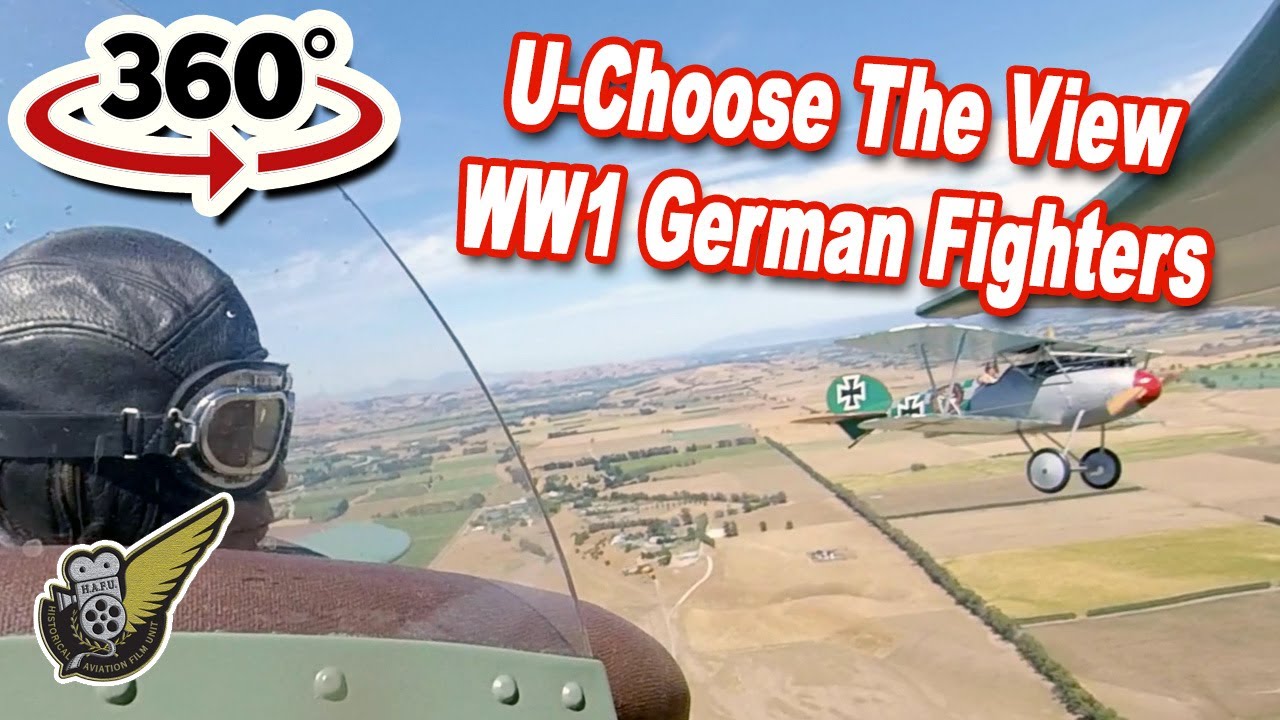
360° In Cockpit : You Choose The View — This is just what Boelcke might have seen in WW1when he was flying his Albatros fighter. In this video you can scroll around and look at the view from the Albatros D.II, and see what it's like to look over your shoulder and having two Albatros other fighters on your wing -- this is as real as it gets! Historical Aviation Film Unit
Share This Story :
Other Stories and Videos:
Kiwi Troops Win A Significant WW1 Battle Using Medieval Tactics
Airfix To Re-release Iconic Bristol Fighter and Fokker Triplane Combo
Oddball WW1 Aircraft With The Propellor Behind The Pilot

First Of Three Fokker Eindeckers Takes To The Sky
If you sign up to be a Member on our Historical Aviation Film Unit channel then you'll have immediate access to this extra material. Click the button at right, then on our channel page click the 'Join' button - it'll help us immensely.
Please consider subscribing to HMTV, or buy us a drink to support our historical (story and film) preservation endeavours.
Copyright © All Rights Reserved — Historical Aviation Film Unit
Template by OS Templates