
Do You Have Historic Film That Is Worthwhile Preserving?

Former Commanding Officer of 75 Sqn RNZAF, Wing Commander John Lanham provides some interesting information on how well the Royal New Zealand Air Force Strike Wing pilots faired against their US counterparts during joint military exercises in the early 1980s.
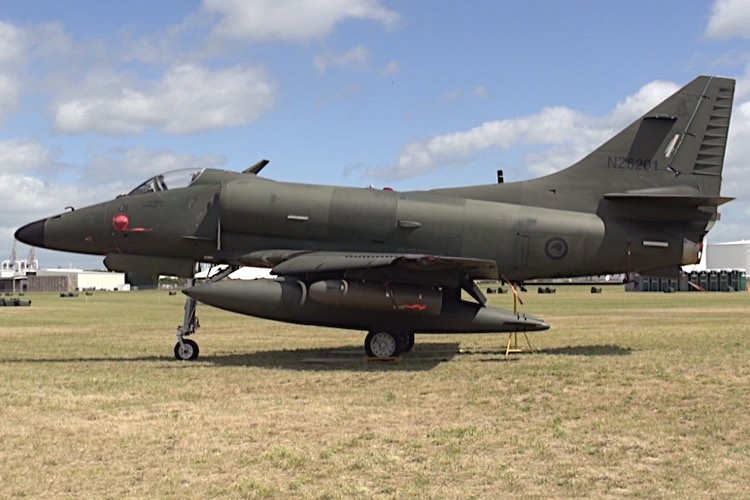
Several Ex-RNZAF A-4 Skyhawks are preserved in various museums around New Zealand, including the Classic Flyers Museum in Tauranga, the New Zealand Warbirds facility at Ardmore Airfield in Auckland, and the RNZAF Museum in Christchurch.
Photo © Historical Aviation Film Unit
Click To View: This video, taken from older S-VHS footage filmed in the 1980s, shows several Douglas A-4 Skyhawk's of the RNZAF's No 75 Squadron taking off from RNZAF Base Ohakea and flying a low-level sortie across the central North Island of New Zealand.
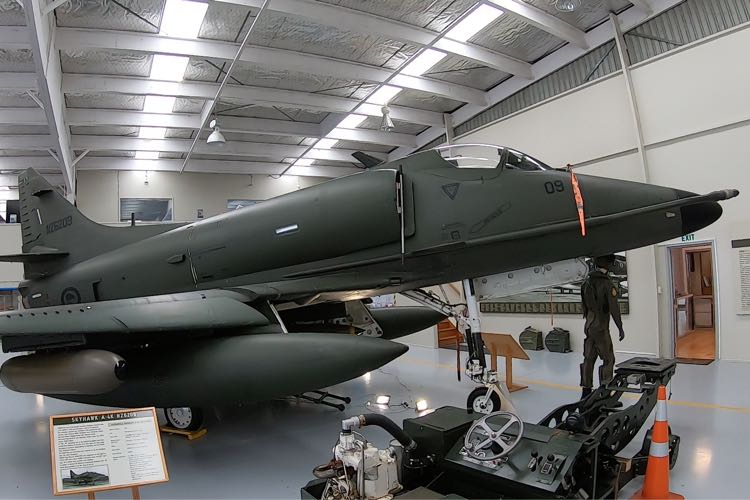
Another ex-RNZAF A-4 Skyhawk, this one at New Zealand Warbirds at Ardmore Airfield. Copyright © Historical Aviation Film Unit
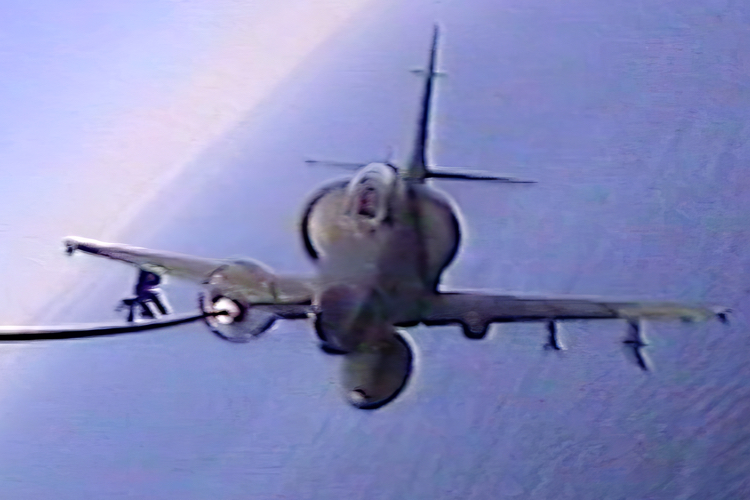
An image of an RNZAF A-4 re-fuelling, as seen from another A-4. This photo is a frame from an S-VHS video tape filmed in the early 1980s. Copyright © Historical Aviation Film Unit v ia Dennis Conner
John continues:
"In the two-week program that I went to, flying two missions a day at eight Skyhawks—one in the morning, one in the afternoon—we were never intercepted, and that really smoked the Americans. They were getting seriously angry towards the end that they were not getting this Kiwi squadron. Their radars were not picking us up because we were so low until too late, and then we were just dropping dumb bombs, which were streamlined bombs without high drag. So we had to drop relatively high, pulling up to about 3,000 feet and then down in a 20-degree dive. But of course, in the Philippines, it was dead calm. So, literally, once you'd finished jinking and everything else, for a couple of seconds, you'd fly level, put the piper on the target, and then, because we were well-trained and had a lot of weapons practice back at Ohakea, in 35 to 45 knots, gusting 55, hitting the target up there was a breeze. So, our weapons scores, again, totally astounded the Americans."Share This Story :
Other Stories and Videos:
Do You Have Historic Film That Is Worthwhile Preserving?
RNZAF instructor awarded Distinguished Service Decoration
Warbirds Over Wanaka First Show In Six Years
Royal New Zealand Air Force Air Tattoo Coming In 2017
If you sign up to be a Member on our Historical Aviation Film Unit channel then you'll have immediate access to this extra material. Click the button at right, then on our channel page click the 'Join' button - it'll help us immensely.
Please consider subscribing to HMTV, or buy us a drink to support our historical (story and film) preservation endeavours.
Copyright © All Rights Reserved — Historical Aviation Film Unit
Template by OS Templates