Roaring 40s At Warbirds Over Wanaka

-
Preserving and Recording Audio-Visual History
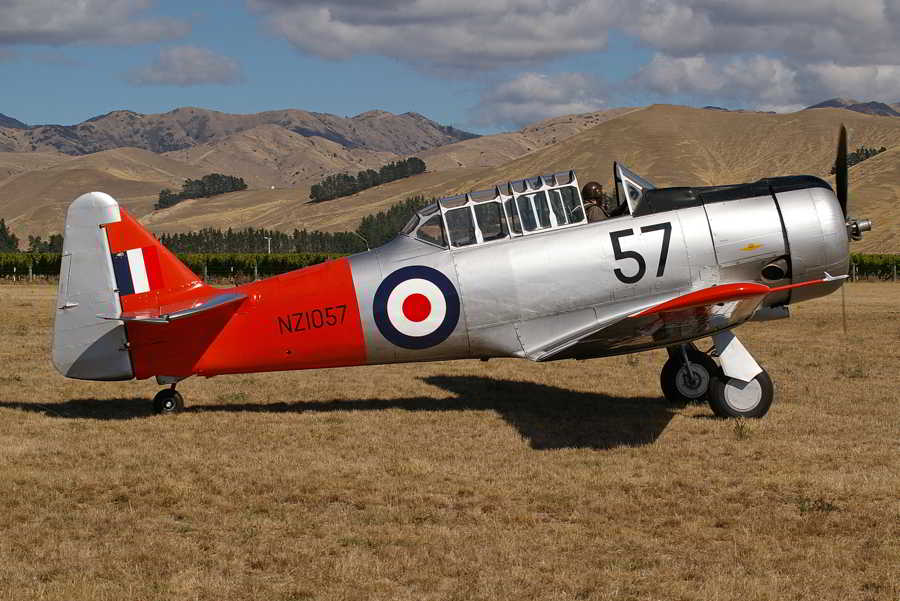
Built in 1943, NZ1057 was stationed at Gisborne with No.30 Torpedo Squadron. When this unit was first formed in May 1943 it was as an amalgamation of airmen from No. 7 and No. 8 Squadrons RNZAF, which had been disbanded after the withdrawal of the Vickers Vildebeest aircraft from NZ service. For the next few months the squadron operated Harvards and Vickers Vincent aircraft that had been inherited from No.8 Squadron, and then later they were re-equipped with Grumman TBF Avenger Torpedo bombers. In 1944 the unit deployed to Luganville airfield on Espiritu Santo island in the Pacific for operational training, and then combat.
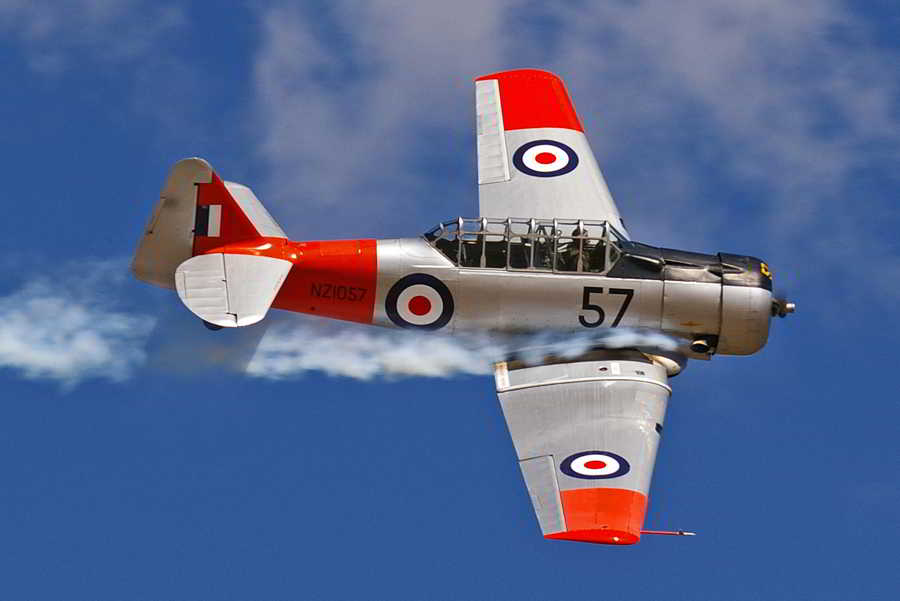
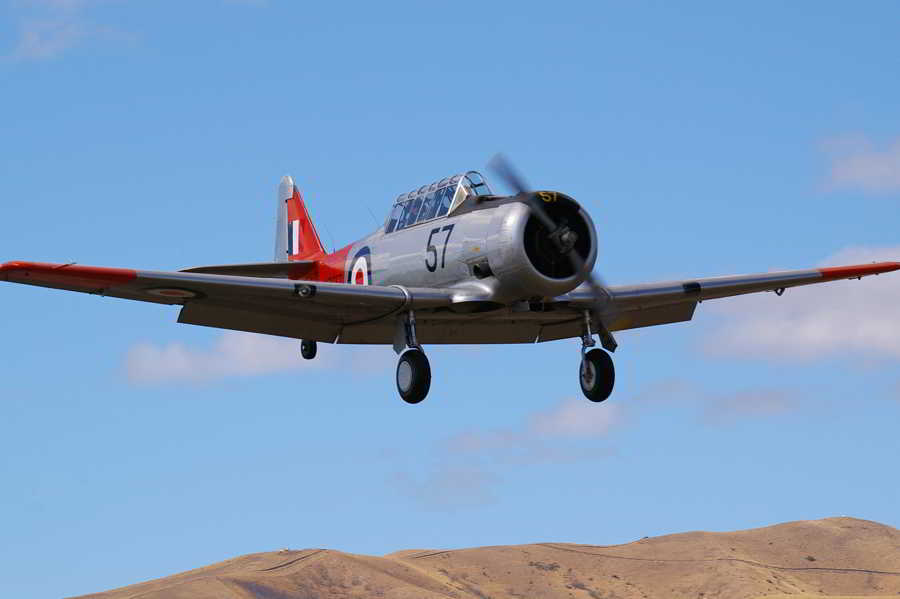
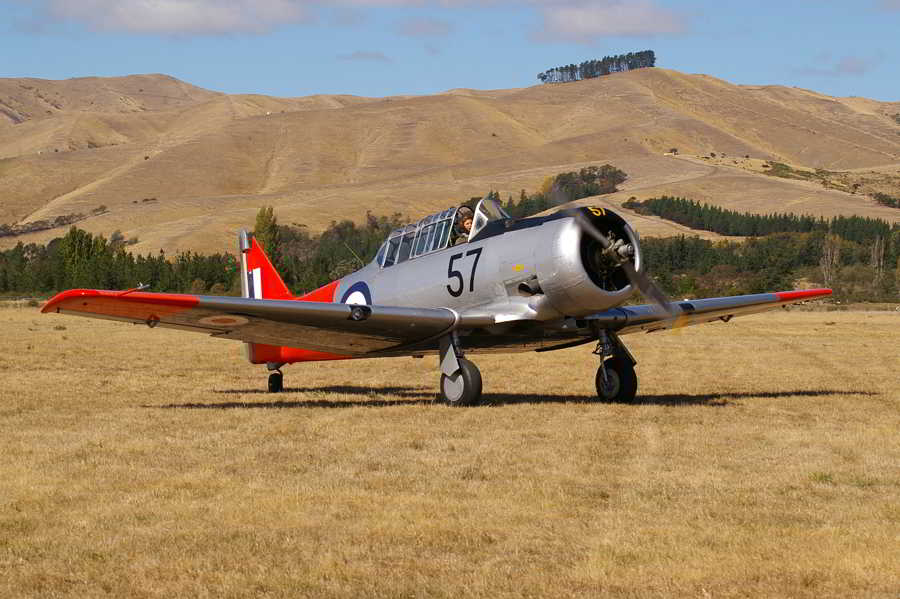
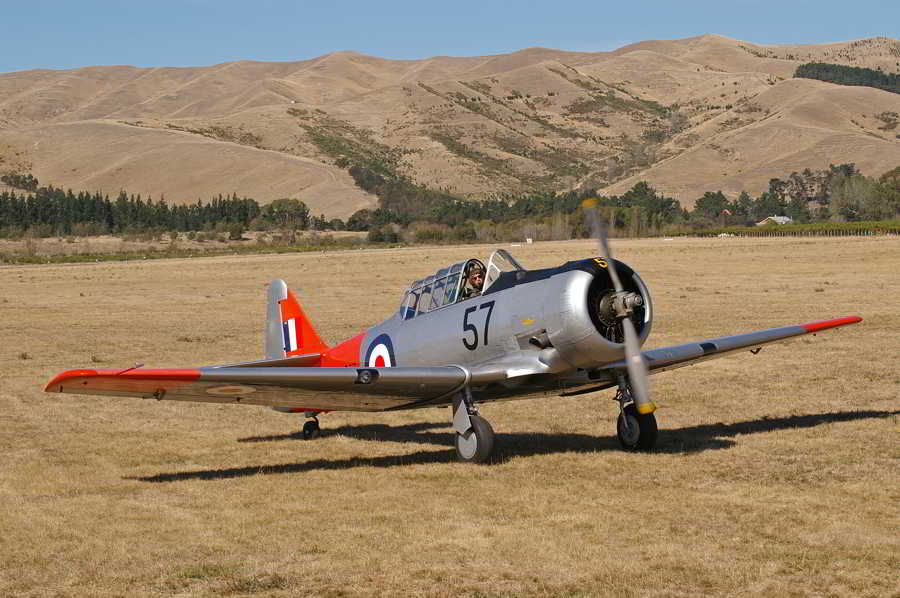
North American Harvard '57'.
Photo: © Historical Aviation Film Unit
Year: 1935 Built: 15,495 Serial: NZ1057 Registration: ZK-TVI Top Speed: 335 km/h at 1,500m Wingspan: 13.0m Height: 3.56m Length:8.8m Engine: 600hp Pratt & Whitney R-1340 Wasp radial Ceiling: 7,400m Range: 1,170km Armament: provision for up to three 7.62mm (0.30in) machine guns, and up to 250lb of bombs in some cases
The British initially expressed interest in using the North American T.6 as a training aircraft in 1938, and went on to order 200 for the Commonwealth Air Training Programme based in Southern Rhodesia (modern day Zimbabwe). The aircraft design was modelled after the Texan variant BC-1, and it was designated as the Harvard Mk I. Many of the RNZAF Harvards were Mk.II’s, by construction or conversion, which included a British style control column and instrument panel, and provision for machine guns and bomb racks.
The Commonwealth Air Training Program, also known as the British Commonwealth Air Training Plan (BCATP), was a monumental joint military aircrew training program created during World War II. It was a unique and ambitious initiative undertaken by the United Kingdom, Canada, Australia, and New Zealand, with the primary aim of training aircrew for the Royal Air Force (RAF) and other Allied air forces. Initiated in 1939 and formally established in December 1940, the BCATP was a response to the urgent need for trained aircrew to meet the growing demands of the war. The program was largely based in Canada, which offered vast, open spaces ideal for training and was relatively safe from enemy attack. It also operated in several training facilities across Australia, New Zealand, and South Africa.
Under the BCATP, tens of thousands of pilots, navigators, bomb aimers, wireless operators, air gunners, and flight engineers were trained in a network of schools and facilities. The program was remarkable not only for its scale but also for its efficiency and the quality of training provided. The BCATP standardized training procedures and equipment across the participating countries, ensuring a consistent and high level of skill among the graduates. The program was a significant factor in the Allied victory in the air, as it produced a steady stream of well-trained aircrew ready for combat operations. By the time the program wound down in 1945, it had trained over 130,000 aircrew, making an indelible contribution to the war effort and solidifying the bonds between the Commonwealth nations.
Hear the rumble as several Harvards come in to land at Hood Aerodrome (Masterton, NZ).
The decision to phase out the Harvards from New Zealand service came as the RNZAF modernized its fleet and training methodologies. By the 1970s, the Harvards, though still reliable, were becoming outdated compared to more modern training aircraft. They were increasingly seen as less relevant for training pilots for contemporary jet aircraft, which required different skill sets and technologies. Consequently, the RNZAF began to explore newer, more advanced training aircraft to replace the venerable Harvards.
The disposal process of the Harvard fleet involved several stages, including the sale of many of the aircraft to private owners and collectors. This transition was met with a sense of nostalgia within the aviation community, as the Harvard had been a beloved and iconic part of New Zealand's aviation landscape. Many of these aircraft found new life in civilian hands, often appearing in air shows and private collections, where they continue to be cherished for their historical significance and unique flying experience. The departure of the Harvards from active service with the RNZAF was a reflective moment, marking both the end of a significant chapter in New Zealand's aviation history and the beginning of a new era with more technologically advanced training aircraft.
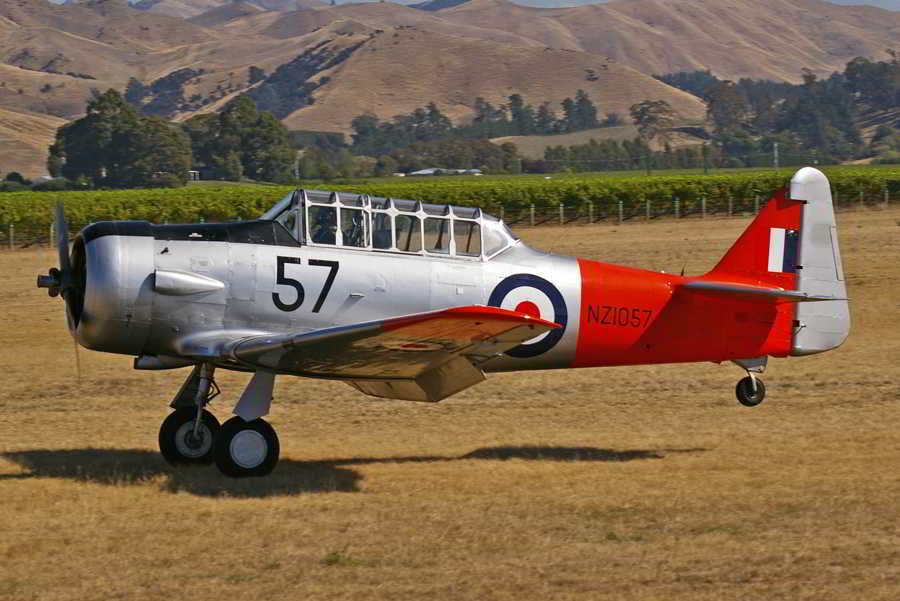
Harvard '57 Photo: © Historical Aviation Film Unit
When the RNZAF disposed of its fleet of Harvards in the late 1970’s NZ1057 suffered the ignominy of becoming a playground amusement before it was recovered and subsequently rebuilt from the wheels up to flying condition in 1998. The aircraft is now presented in its 1950’s Royal New Zealand Air Force training livery.
More Videos:
Roaring 40s At Warbirds Over Wanaka
Roaring 40s At Wings Over Wairarapa
Practicing Formation Flying In Harvards
RNZAF's 75th Birthday At Ohakea
More Photos:
Share This Page :
HMTV is our advert-free streaming video channel which features an awesome array of video and long form documentary material which is not available elsewhere. Sign up for a free trial and enjoy the significant and varied range of material we have on offer...
Please consider subscribing to HMTV, or buy us a drink to support our historical (story and film) preservation endeavours.
Copyright © All Rights Reserved — Historical Aviation Film Unit
Template by OS Templates