Onboard Video During Practice

-
Preserving and Recording Audio-Visual History
Developed in the mid-1930s, the Harvard was specifically designed as an advanced trainer that had all the attributes, and much of the equipment of a modern combat aircraft. The rapid increase in the need for training aircraft early in WW2 both in the United States and in Britain, led to large orders being placed for the Harvard.
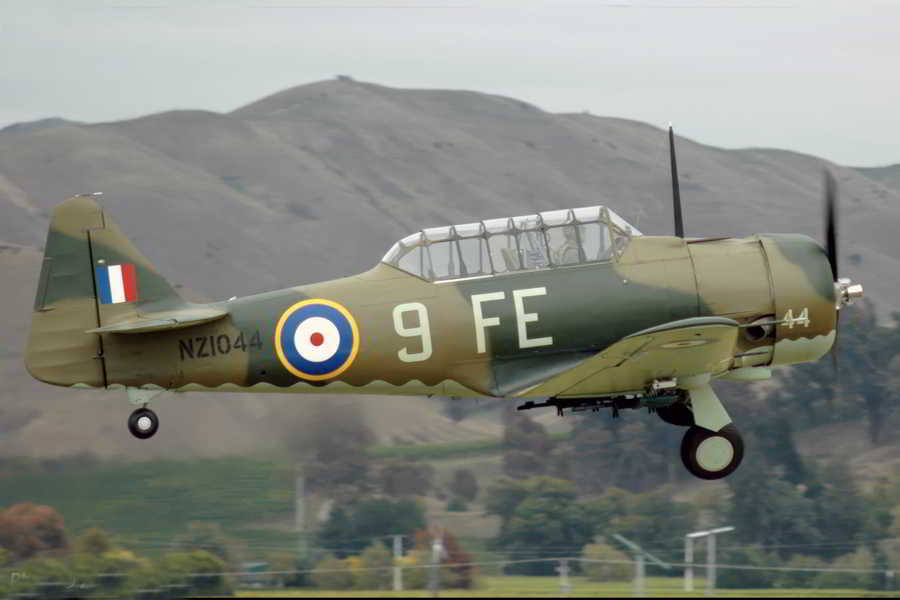
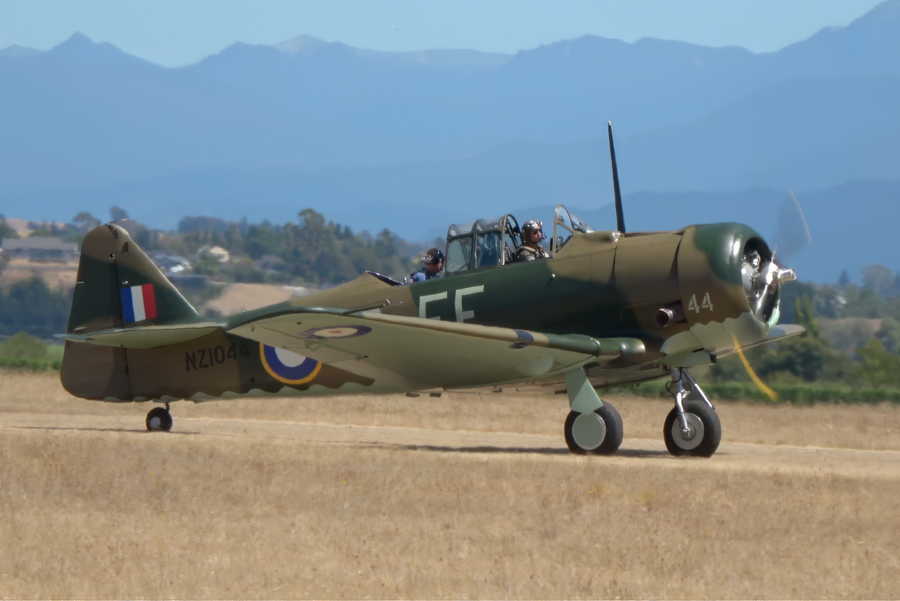
Harvard '44 takes off at Classic Fighters, Omaka Aerodrome, Blenheim (NZ)'.
Photo: © Zac Yates
Year: 1935 Built: 15,495 Serial: NZ1078 Registration: ZK-SGQ Top Speed: 335 km/h at 1,500m Wingspan: 13.0m Height: 3.56m Length:8.8m Engine: 600hp Pratt & Whitney R-1340 Wasp radial Ceiling: 7,400m Range: 1,170km Armament: provision for up to three 7.62mm (0.30in) machine guns, and up to 250lb of bombs in some cases
This Harvard is one of 202 ordered by the RNZAF in 1943. Arriving in June that year, the aircraft was flown by No 2 Fighter Operational Training Unit at RNZAF Ohakea during WW2. In April 1945 it suffered minor damage when a gear leg collapsed as the aircraft taxied off a runway (because the undercarriage down lock was not properly in place). With a new aileron and wing tip, NZ1044 was quickly returned to service.
After the end of the war NZ1044 was put into storage until the early 1950’s, when it became the first of the RNZAF T-6’s to be put through an upgrade program. It flew again in 1954 with No.3 Territorial Air Force (TAF) at Wigram, and in 1958 it was once more placed into long term storage. In 1972 it was sold to the National Airways Corporation (NAC) for $250 and was used as an instructional airframe for the technical training school students in Christchurch. The aircraft was eventually sold and remained in Canterbury.
The restoration of this aircraft began in 2020 when Bevan Dewes purchased the aircraft and had it transported to Wanaka airfield for work to begin. Over the next three years work progressed steadily and the first post restoration flight took place in early 2023.
VIDEO
During World War II, over 5,000 Harvards were supplied to British and Commonwealth Air Forces. The type's significant production numbers made it one of the most widely built trainer aircraft of the war era.
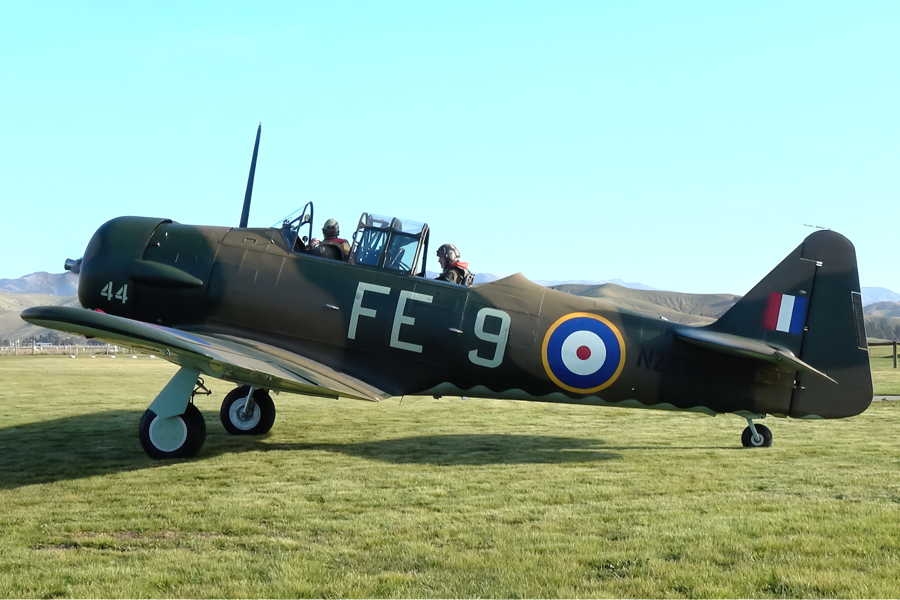
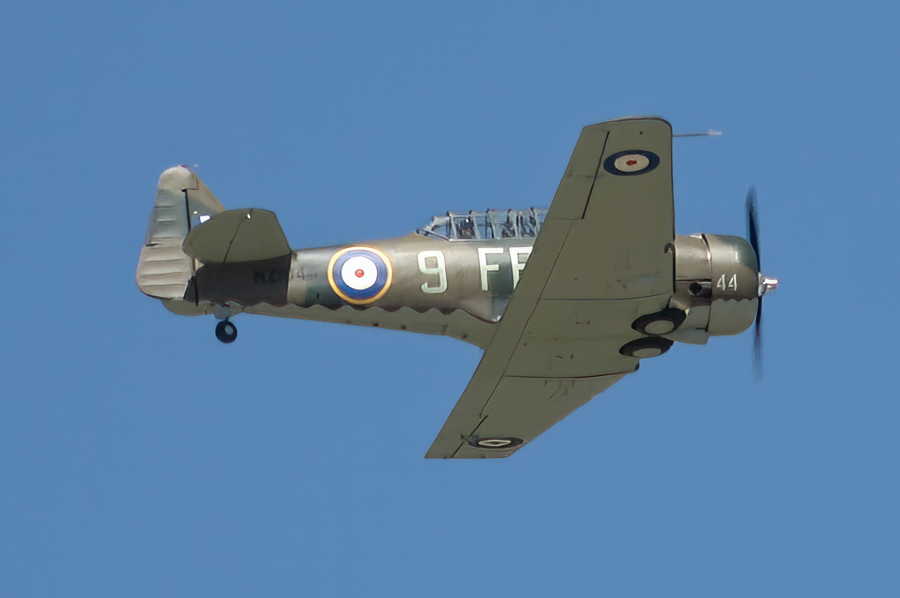
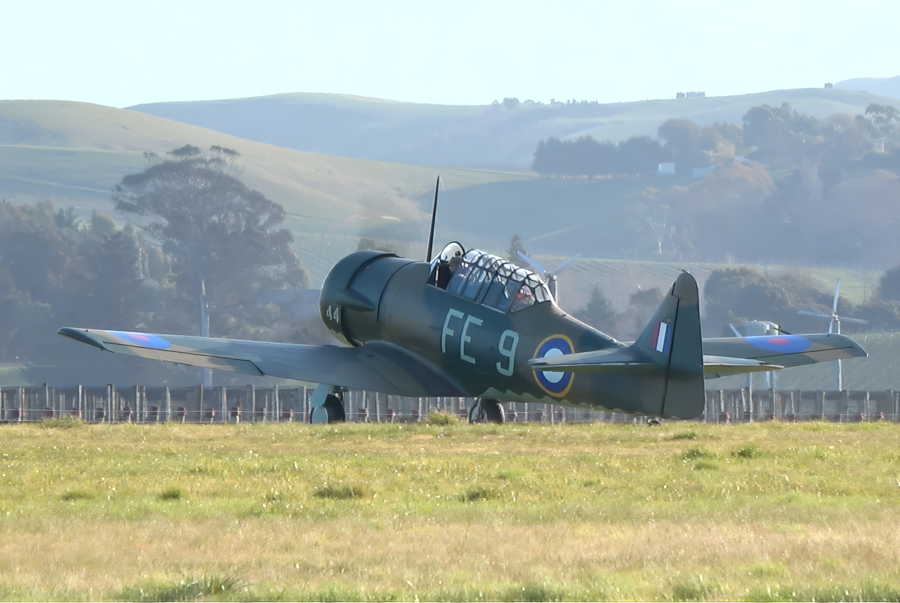
The colour scheme that the aircraft now wears is identical to that it wore during its time with No.2 FOTU at RNZAF Ohakea during the Second World War. Photo: © Les Bushell
The Harvard aircraft holds a significant place in New Zealand's aviation heritage. Its distinctive engine noise, often described as a "roar" or "growl," is well-remembered and recognized by aviation enthusiasts and the general public alike. The many Harvards that ave been preserved and are still flown at air shows like NZ1044, serve as a living tribute to New Zealand's aviation history and the generations of pilots who trained on these aircraft.
Follow and support Legend Aviation via their website at "www.legendaviation.co.nz", and check out how and when you can go for a flight in this magnificent aircraft.
More Videos:
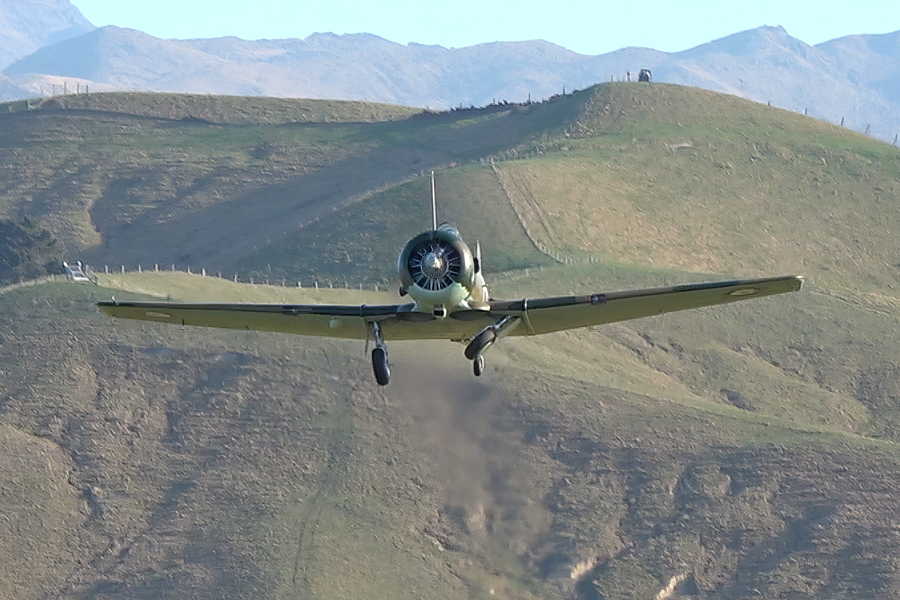
Onboard Video During Practice
Roaring 40's Harvard Team At Omaka In 2005
Roaring 40s At Ardmore Airport In 2012
DDay Anniversary Display Day At Ardmore
More Photos:
Share This Page :
[an error occurred while processing this directive]HMTV is our advert-free streaming video channel which features an awesome array of video and long form documentary material which is not available elsewhere. Sign up for a free trial and enjoy the significant and varied range of material we have on offer...
Please consider subscribing to HMTV, or buy us a drink to support our historical (story and film) preservation endeavours.
Copyright © All Rights Reserved — Historical Aviation Film Unit
Template by OS Templates