Sopwith Camel At Wings Over Wairarapa

-
Preserving and Recording Audio-Visual History
Perhaps the most famous British fighter aircraft of the 'Great War', the Sopwith Camel became a household name during, and after the war. Almost five and a half thousand Camels were produced from 1917 until the end of the war.
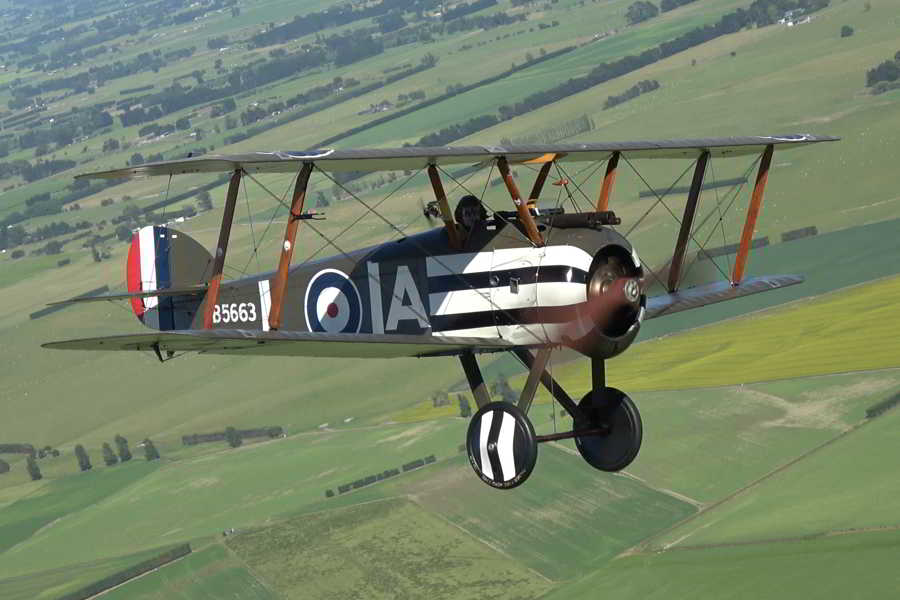
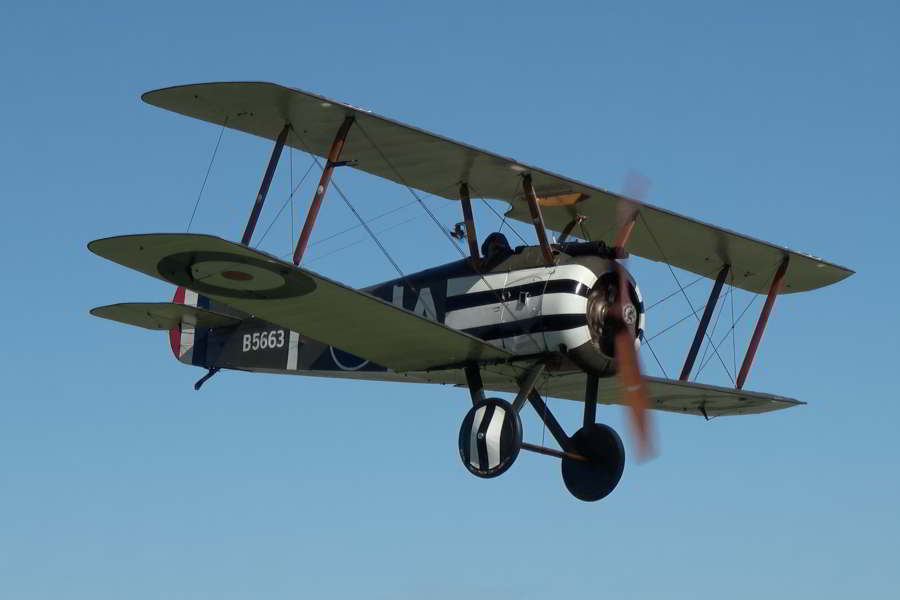
Sopwith Camel of Flt Lt Curtis, A Flight, 10 Naval Squadron, Royal Naval Air Service
Photo: © Historical Aviation Film Unit
Year: 1917 Built: 5,490 Top Speed: 182 km/h Wingspan: 8.53m Height: 2.6m Length: 5.72m Max Weight: 659kg Engine: 130hp Clerget 9b rotary Climb: 5.5m/s Range: 485km Endurance: 150mins Armament: 2 x .303 Vickers with provision for four 9kg bombs This Aircraft: An original airframe with an original 130hp Clerget rotary engine. Previously registered as N6254.
An agile and highly maneuverable aircraft, the Camel accounted for more aerial victories than any other Allied aircraft during World War One. A total of almost 1300 enemy aircraft were downed by Camels, compared with the 413 pilots who died in combat while flying the type.Unfortunately, the Camel also had a tendency to kill inexperienced pilots, and a further 385 were killed in non-combat related incidents while flying the type.
Arther Cobby, an Australian who flew Camels with the Australian Flying Corps, and achieved a score of 29 victories while flying the type, had this to say:
"A great number of trainee pilots had been killed learning to fly this machine, as its tricks took some learning, although they were simple to overcome. Owing to its very small wingspan, its purposely unstable characteristics, and the gyroscopic effect of a rotating engine, it flipped into a spin very easily at low speeds. Consequently, in landing and taking off, a tremendous number of fatal accidents occurred, and a general feeling of dislike for the machine was prevalent. It really had people frightened."
An air-to-air video of a Sopwith Camel being chased by a German Fokker Dr.1 Triplane.
This original British built Camel was imported into the USA in 1920 by Clarence Chamberlin who used it as a company 'hack' for some years. In 1931 it was sold to the Jarrett Museum of WW1 History in Atlantic City, and it was shortly after this that the true identity of the aircraft was lost when the maker's plate was stolen.
In 1950 well known warbirds pioneer Frank Tallman bought the aircraft and restored it to flying condition as N6254. After performing some film work as part of Tallman's collection the aircraft spent time in the US Marine Corps Museum in Virginia, and more recently in the Aerospace Education Centre in Little Rock, Arkansas (USA). The static aircraft was purchased and then restored to flying condition once again by The Vintage Aviator Ltd, making it the fifth original First World War aircraft of the collection to be restored to fully airworthy condition.
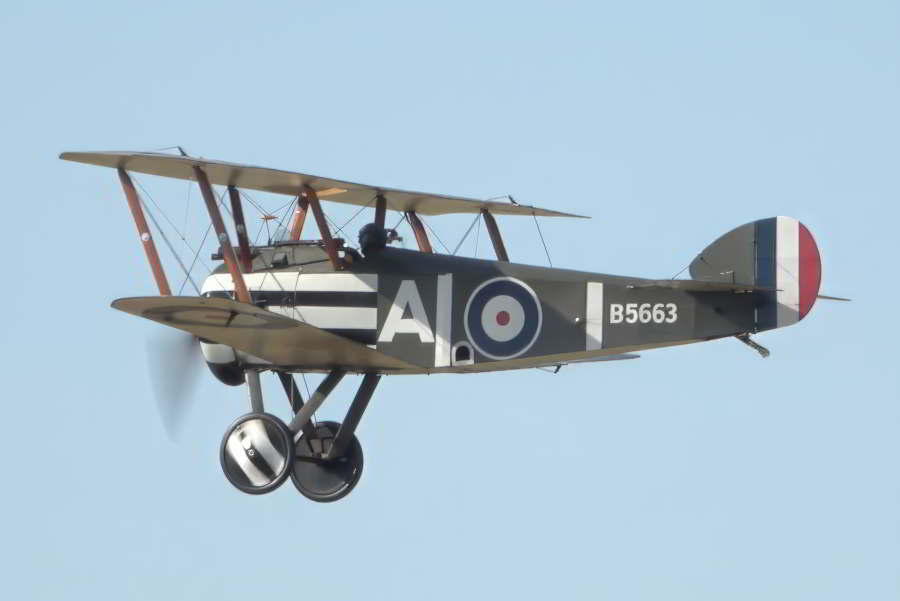
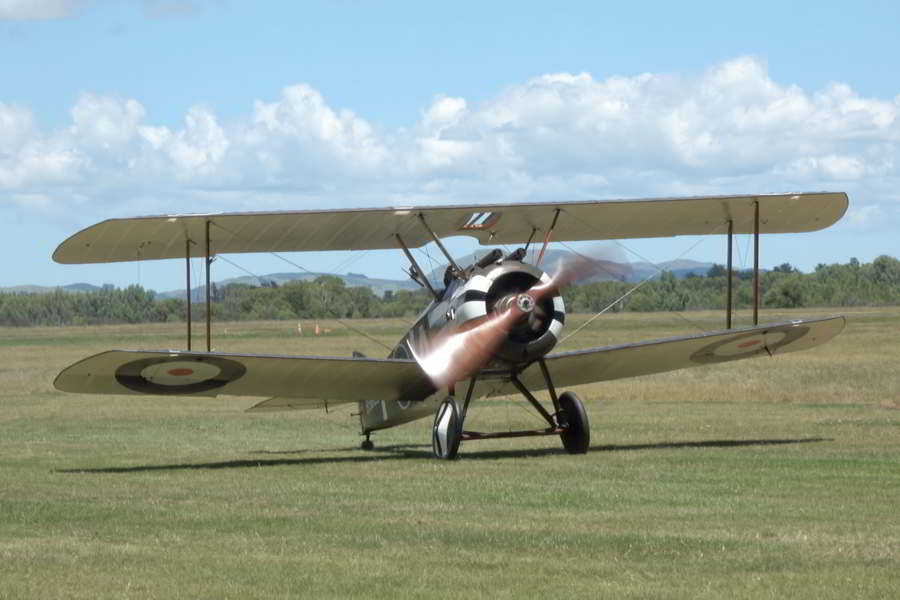
Sopwith Camel take-off Photo: © Historical Aviation Film Unit
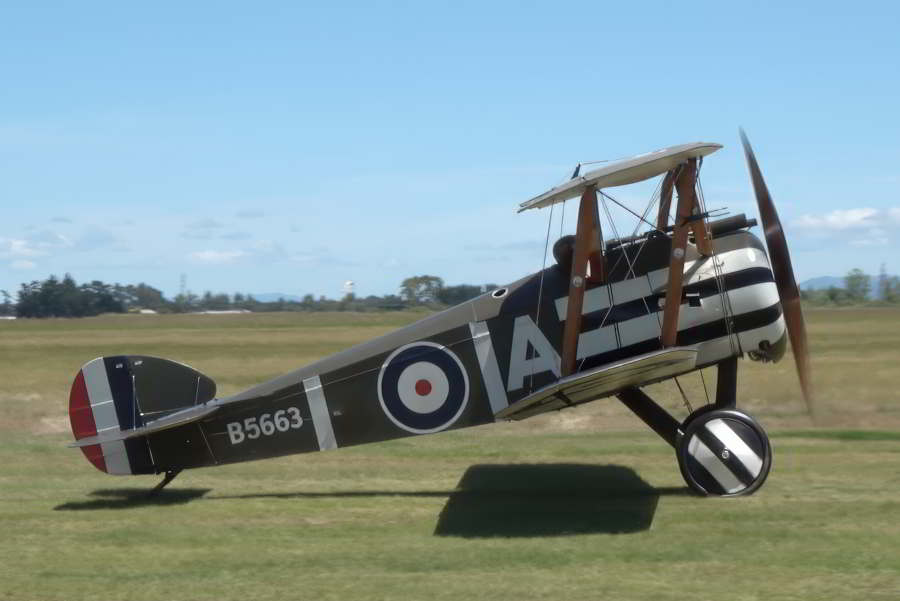
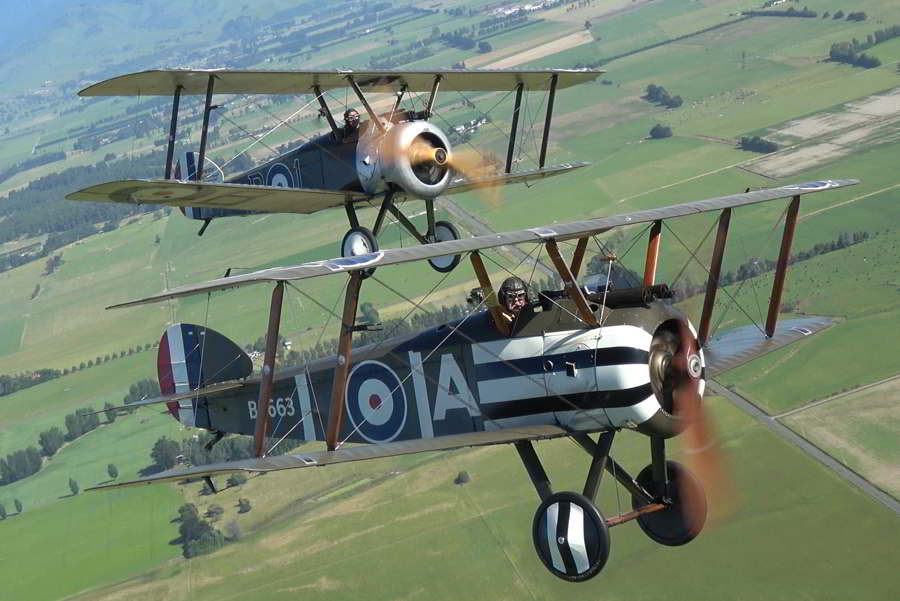
The aircraft is now dressed in the colour scheme of B5663 in which Flight Lt Curtis scored his 11th victory (out of an eventual total of 13) in late 1917. Subsequently (23 January 1918) the aircraft was being flown by Flt Sub-Lt Blyth when it collided with an Albatros scout -- both aircraft fell to the ground out of control and both pilots were killed. The German pilot was credited with the 'victory', and while the two aircraft were reported to have fallen together it appears that they separated close to the ground as the Camel landed relatively intact.
More Videos:
Sopwith Camel At Wings Over Wairarapa
Sopwith Camel At Classic Flyers Air Show
Camel Pilot Performs Sideslip Landing
Sopwith Camel Rock 'n Roll
More Photos:
Share This Page :
HMTV is our advert-free streaming video channel which features an awesome array of video and long form documentary material which is not available elsewhere. Sign up for a free trial and enjoy the significant and varied range of material we have on offer...
Please consider subscribing to HMTV, or buy us a drink to support our historical (story and film) preservation endeavours.
Copyright © All Rights Reserved — Historical Aviation Film Unit
Template by OS Templates