More R.E.8 Video Coming Soon

-
Preserving and Recording Audio-Visual History
The Royal Aircraft Factory's "Reconnaissance Experimental 8" was to be a replacement for the earlier B.E.2 series. With a more powerful engine and better armament (including a forward firing machine gun on the left of the fuselage) the R.E.8 was used in large numbers until the end of the war in 1918. Nicknamed the 'Harry Tate' after an entertainer of the time, the R.E.8 was the most widely used British two-seater aircraft on the Western Front and was also used in Italy, Mesopotamia and Palestine.
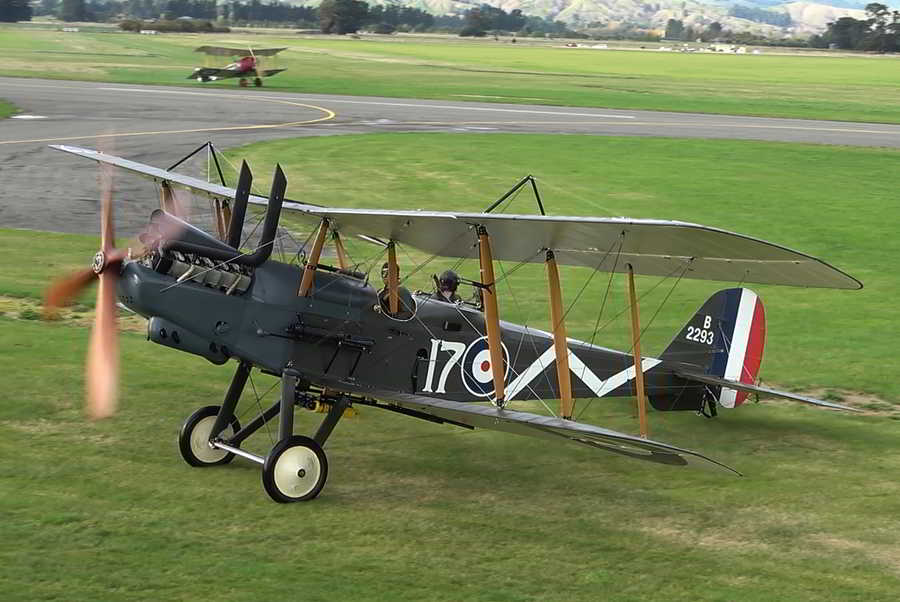
R.E.8 in the colour scheme of B2293, No. 52 Sqn, Royal Flying Corps, flown by 2/Lt. George R. T. Marsh and 2/Lt. Ian M. Dempster in Feb-Mar 1918
Photo: © Historical Aviation Film Unit
Year: 1916 Built: 4,099 Top Speed: 164 km/h Operational Ceiling: 4,115m Wingspan: 12.98m Height: 3.49m Length: 8.52m Max Weight: 1,301kg Engine: 150hp R.A.F.4a air cooled v-12 inline Endurance: 255 mins Armament: 1 x .303 Vickers forward facing, 1 or 2 x .303 Lewis in rear, plus up to 102kg of bombs This Aircraft: A new TVAL reproduction with a new build R.A.F.4a engine
Despite being outclassed by most enemy fighters, the R.E.8 was engaged in all manner of operations from observation duties, pure reconnaissance, night bombing and general ground attack.
The original A4267 was built by the Austin Motor Company and was initially allocated to No. 5 Sqn in the Picardie area of France in April 1917. No. 52 Sqn took the aircraft on charge in January 1918 where it served for another five months before being destroyed in a fire in May. During mid-1917 52 Sqn supported the summer offensives at Ypres. It's likely that during this period they would have flown dangerous low-level 'contact patrols' in support of the Allied troops on the ground.
A Contact Patrol was intended to be an aerial liaison between the front line troops and the staff HQ behind the lines during offensive maneuvers. Invariably during an attack the front line troops would find themselves cut off from their command headquarters and they’d not be able to send word as to where they were.
Built by The Vintage Aviator Ltd in New Zealand, and now with the Royal Air Force Museum in England, this exacting Royal Aircraft Factory R.E.8 reproduction was in all likelihood the first RE8 to fly anywhere in the world in almost 90 years.
When searching for troops on a contact patrol, a low-flying R.E.8 could spot the red flares the forward units were instructed to light, and could then fly-over and drop messages at the HQs which were marked by sheets of white cloth pegged on the ground. The HQ would then use a signal groundsheet (like a horizontal venetian blind) to send Morse Code messages to the aircraft. At the front the aircraft carried Klaxon horns which they used to alert the ground troops that they were waiting for flares to be lit. Unfortunately these patrols were not always a success—sometimes forward troops failed to light their flares, and mobile HQ’s did not lay out their identifying groundsheets.
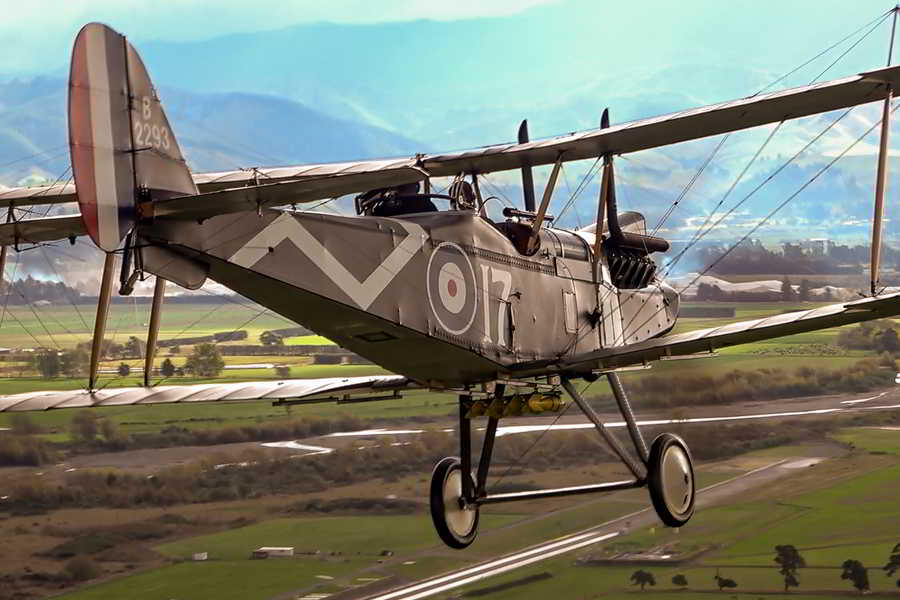
An unusual view of the aircraft as it approaches the aerodrome after a successful patrol. Photo: © Historical Aviation Film Unit
In November 1916, 52nd Squadron became the first R.F.C. unit to be equipped with the R.E.8, and as such suffered a significant loss in morale due to early problems as the pilots came to grips with the new aircraft type (mainly fatal stalls and spins). The problems reached a head in January 1917 when the unit decided to swap their aircraft with another squadron in order to return to flying the B.E.2's that they'd previously operated. This was short lived however, and the unit re-equipped with the R.E.8 in May 1917, and then continued to use them through the remainder of the war.
In the mid afternoon of the 24th of February 1918, Vizefeldwebel Friedrich Altemeier of Jasta 24 brought down R.E.8 B2293, near Marcy. The aircraft was forced down intact behind the German lines, and the two crew were captured, and the more or less intact aircraft photographed. However, the R.E.8 crew had not been completely out-fought by Altemeier in his Albatros, as they had inflicted enough damage on his aircraft that it suffered engine problems and was forced to land straight after the R.E.8. Dempster (an Australian) died of his wounds the following day but Marsh survived the war and died in 1979.
More Videos:
More R.E.8 Video Coming Soon
More R.E.8 Video Coming Soon
More Photos:
Share This Page :
HMTV is our advert-free streaming video channel which features an awesome array of video and long form documentary material which is not available elsewhere. Sign up for a free trial and enjoy the significant and varied range of material we have on offer...
Please consider subscribing to HMTV, or buy us a drink to support our historical (story and film) preservation endeavours.
Copyright © All Rights Reserved — Historical Aviation Film Unit
Template by OS Templates


