Yak-52 Team Aerobatics

-
Preserving and Recording Audio-Visual History
The Yak 52 is a popular two-seat aerobatic aircraft, powered by a 360hp radial engine. Both the Yak 52 and the Chinese Nanchang CJ6 have a common ancestor in the earlier Soviet Yak 18 trainer from the late 1940's. Often mistaken for the Nanchang, the Yak 52 can be distinguished by its shorter, straighter wings, the partially retracted undercarriage, and its more rounded tail profile. The Nanchang has a more square tail, the longer wings are slightly gull shaped, and the wheels fully retract.
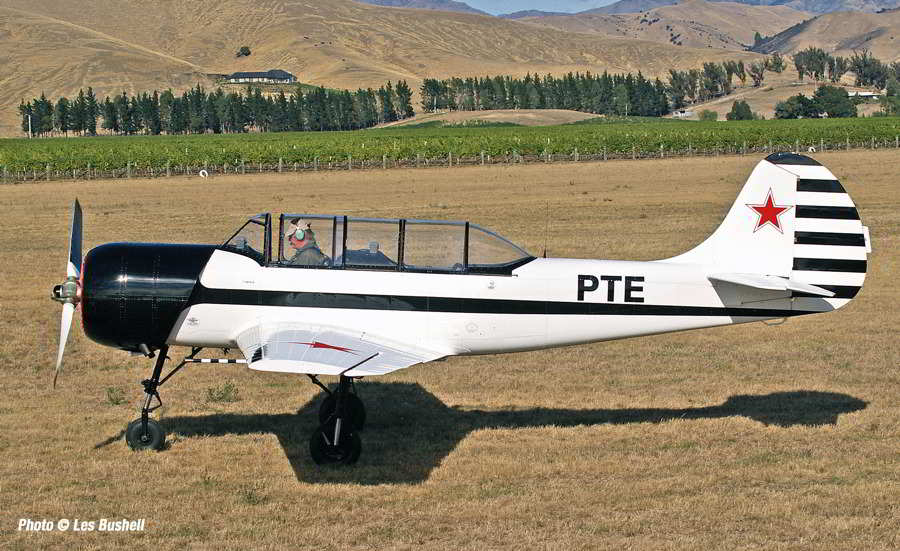
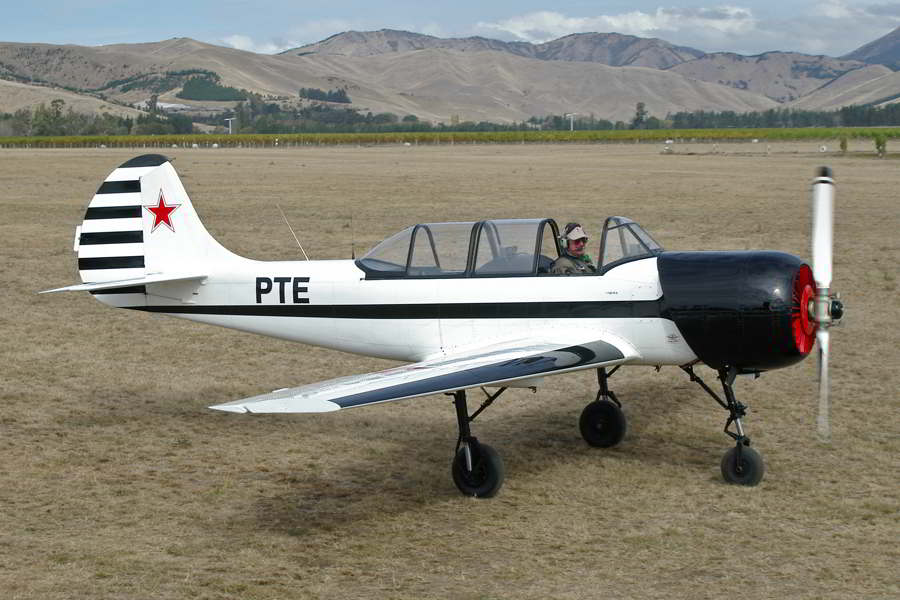
Peter Vause taxis past the crowd prior to a display by the Yak-52 aerobatic display team.
Photo: © Les Bushell
Year: 1976 Built: 1,700+ Registration: ZK-PTE Top Speed: 285 km/h at sea level Wingspan: 9.3m Height: 2.7m Length: 7.745m Engine: 360hp Vedneyev M-14P 9-cyclinder radial Ceiling: 4,000m Range: 550km
Designed by the Yakovlev Bureau in Russia, the prototype aircraft (originally designated Yak-50U) first flew in 1974, and they were still being built under licence in Romania (by Aerostar) up to 1998. Until 1991 over 1700 aircraft of the type were built, with a smaller number being produced between then and the end of the production run.
The Yak-52 was designed to be an aerobatic trainer, and the 360hp engine provides a high power-to-weight ratio making the aircraft well suited for that purpose. As well as training aerobats, the aircraft has also been used as a primary trainer for pilots who would later transition to Soviet jet aircraft. Because of this use as a military trainer, the type incorporates a number of features to be found on the early postwar Soviet fighters, such as the seat design, the tandem cockpit, the tricycle landing gear, and the military style layout of the controls in the cockpit. Many of the aircraft features closely mimic those of the Soviet-built Yak-17 UTI jet fighter trainer.
PARAGRAPH
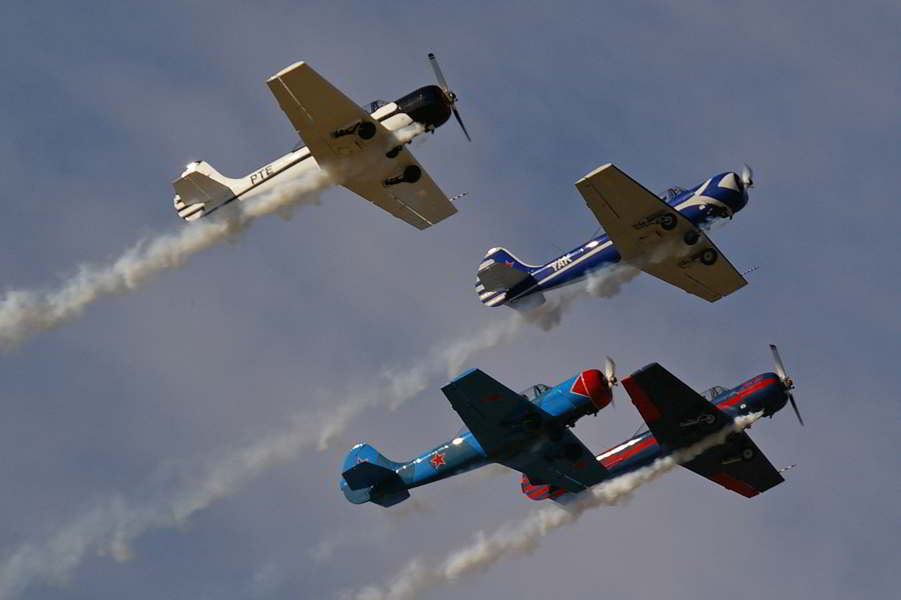
The Red Star Yak 52 Display Team do their thing (massed formation aerobatics) at the Classic Fighters 2007 airshow held at Omaka Aerodrome in Blenheim, New Zealand.
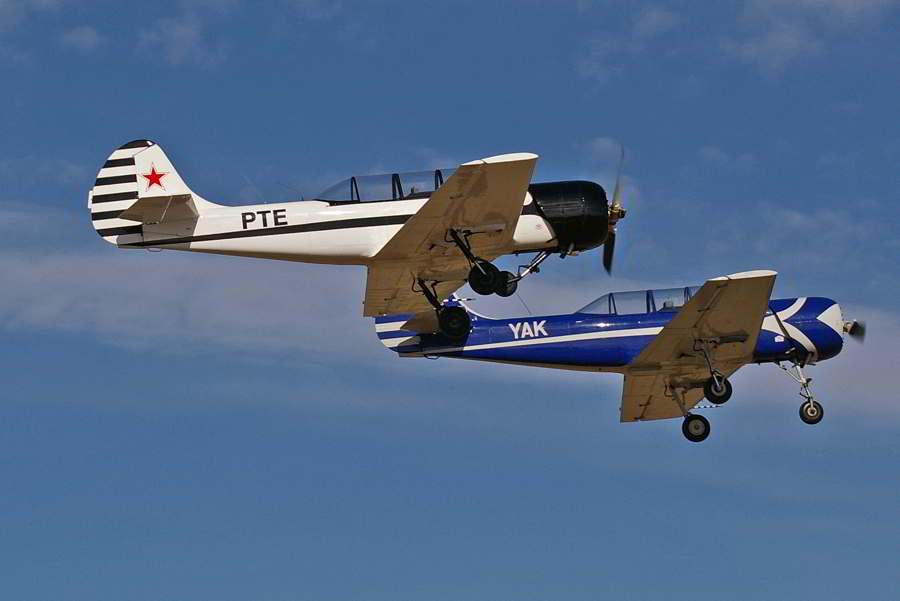
The distinctive partially retractable undercarriage on this aircraft, which when retracted still leaves the wheels visible, is a provision for lessening damage to the aircraft should novice pilots attempt to land with the wheels up. In the event that this should happen, it is possible to cut the tips off the wooden propeller blades, and then take off again with the wheels still in the retracted position.
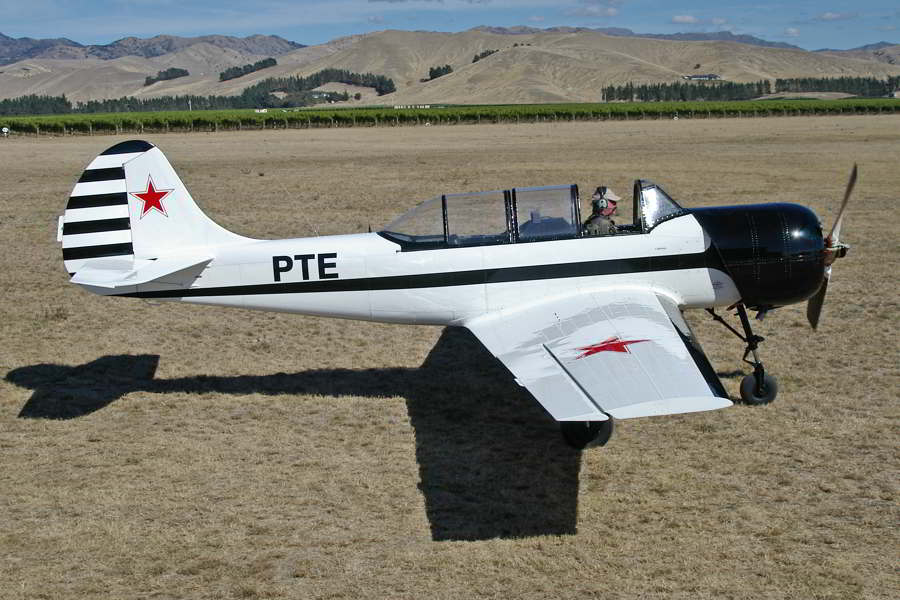
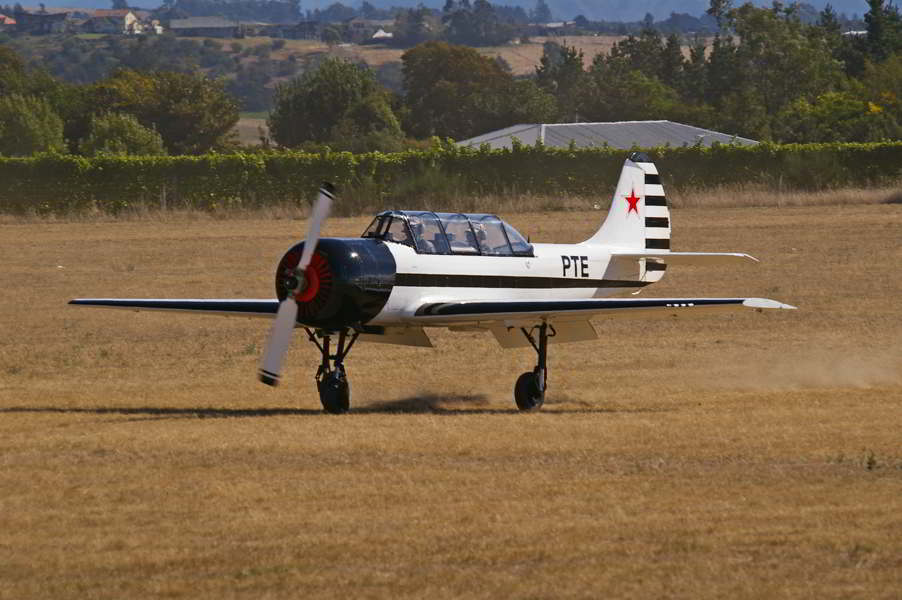
Returning from a display.. Photo: © Les Bushell
In the early 1980s a single seat (Yak-53) variant was being designed, but this never caught on, and only one of those aircraft remains flying today (in the USA).
More Videos:
Yak-52 Team Aerobatics
Yak-52's At Wings Over Wairarapa
Massed Yak-52s At Tauramga Airshow
Several Yak-52's & Chinese Nanchangs
More Photos:
Share This Page :
HMTV is our advert-free streaming video channel which features an awesome array of video and long form documentary material which is not available elsewhere. Sign up for a free trial and enjoy the significant and varied range of material we have on offer...
Please consider subscribing to HMTV, or buy us a drink to support our historical (story and film) preservation endeavours.
Copyright © All Rights Reserved — Historical Aviation Film Unit
Template by OS Templates