Nieuport Bébé Display At Wings Over Wairarapa

-
Preserving and Recording Audio-Visual History
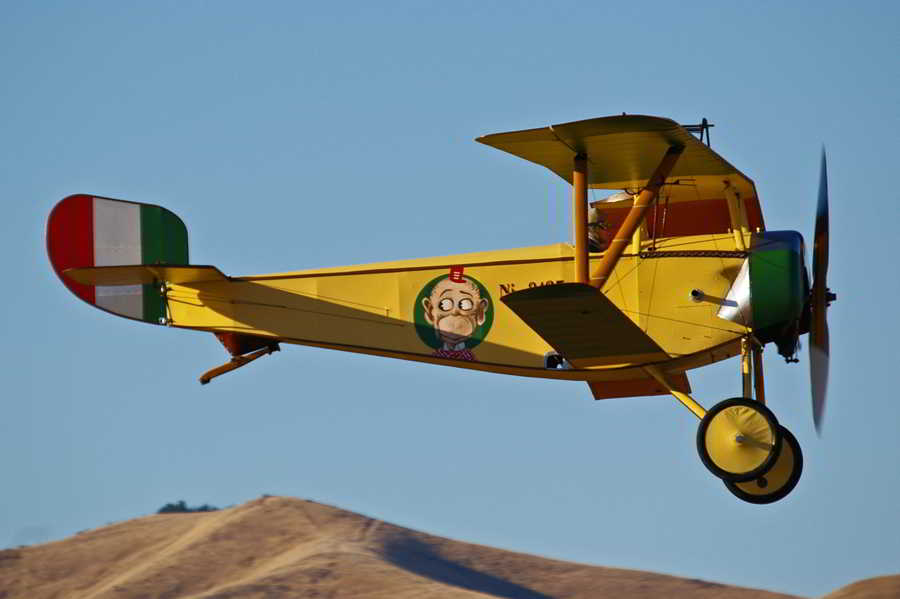
Designed as a contender in the 1914 Gordon Bennett air race, the Nieuport N.11 was affectionately known as the "Bébé" (baby), and was small, fast and highly maneuverable. After the race was cancelled due to the outbreak of the war, it was not long before France'’'s Aviation Militaire accepted it for production as a combat aircraft.
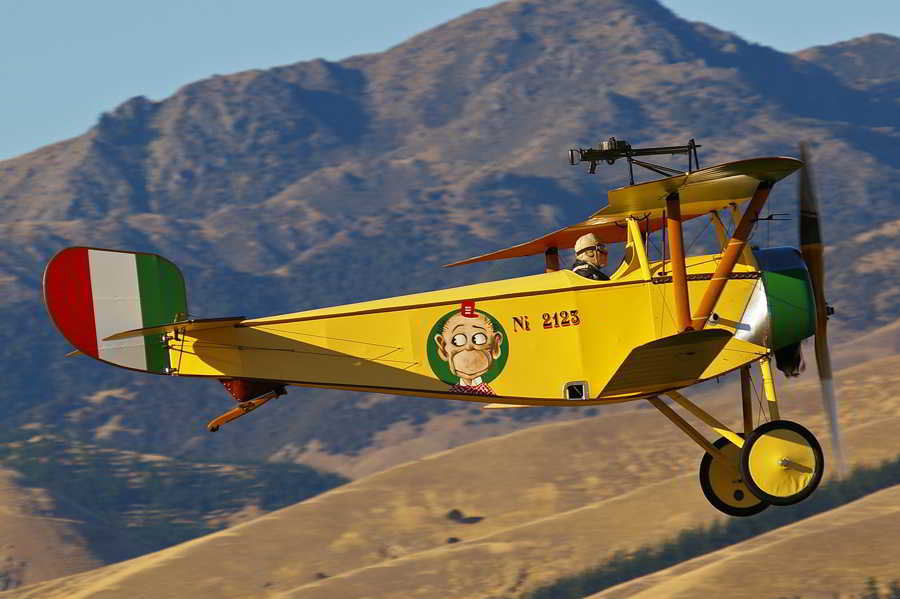
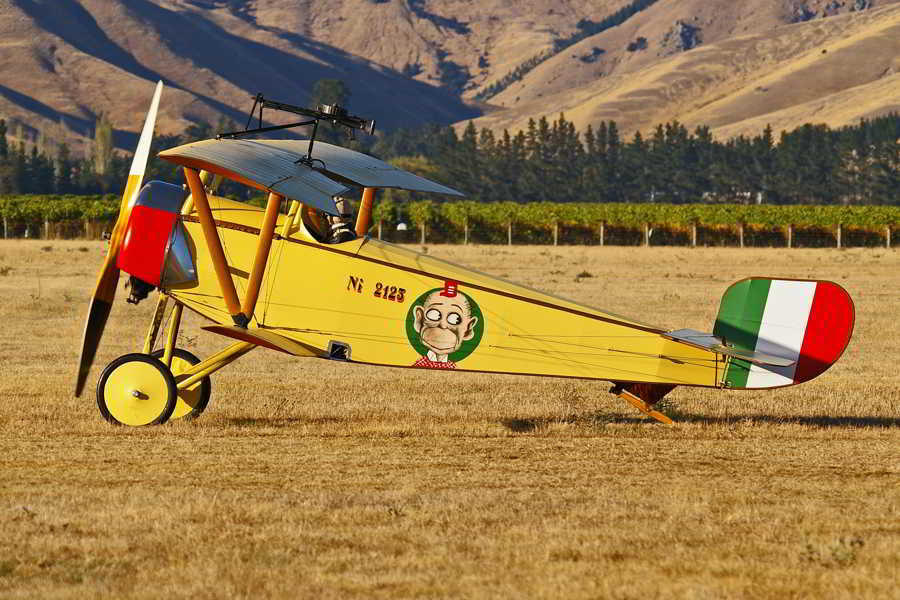
Nieuport Ni.11 as 2123, the aircraft of Sgt Alvaro Leonardi.
Photo: © Historical Aviation Film Unit
Year: 1915 Built: 700+ Top Speed: 156 km/h Operational Ceiling: 4,600m Wingspan: 7.55m Height: 2.45m Length: 5.8m Max Weight: 480kg Engine: 80hp Le Rhône 9C rotary Range: 330km Endurance: 150 mins Armament: 1 x .303 Lewis or Hotchkiss firing above the propeller This Aircraft: A replica with an original 80hp Le Rhône rotary, built in the USA.
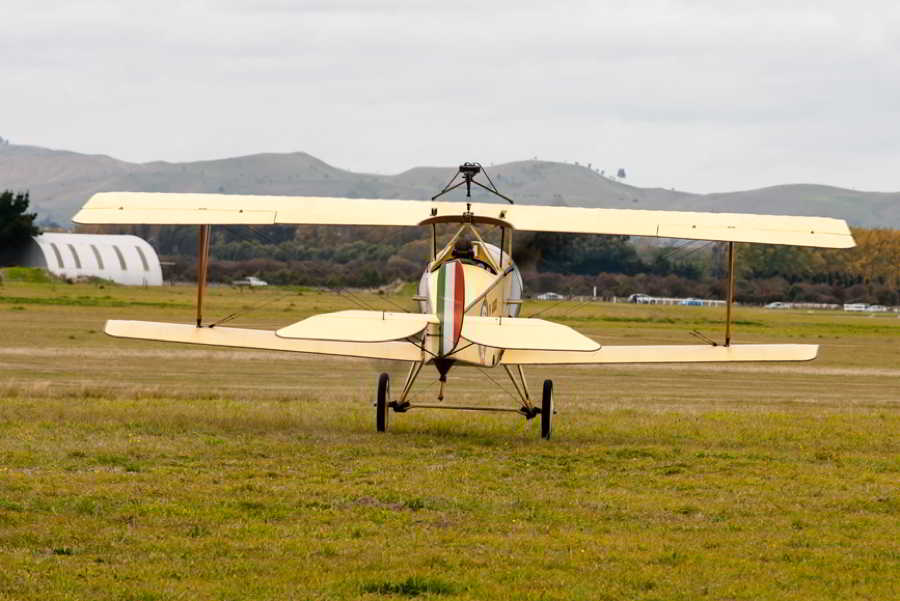
Designed as a sesquiplane, a unique configuration featuring a full-sized lower wing and a smaller upper wing, the Nieuport 11 offered superior maneuverability and speed compared to its predecessors. This design approach minimized drag while maintaining structural strength, making the Bébé a formidable adversary against the German aircraft of the time, particularly the Fokker Eindecker series.
With its lightweight and agile design, the Nieuport 11 quickly became a favorite among Allied pilots. Powered by a Le Rhône 9C rotary engine, which produced around 80 horsepower, the aircraft had a top speed of approximately 97 mph (156 km/h). The aircraft was armed with a single synchronized Vickers machine gun, mounted on the top wing to fire clear of the propeller arc. This armament configuration was a significant advancement, as it allowed for more accurate and safer firing. The Nieuport 11's nimble handling characteristics and effective armament played a crucial role in regaining Allied air superiority during the early years of the war, particularly in the Battle of Verdun and the Battle of the Somme.
The Nieuport 11's impact went beyond its immediate battlefield successes and its influence was seen in the development of future fighter aircraft. Many famed pilots, including several aces like Charles Nungesser and Francesco Baracca, began their illustrious careers flying the Nieuport 11. The aircraft's design principles, emphasizing agility and firepower, set a new standard for fighter aircraft and influenced subsequent designs.
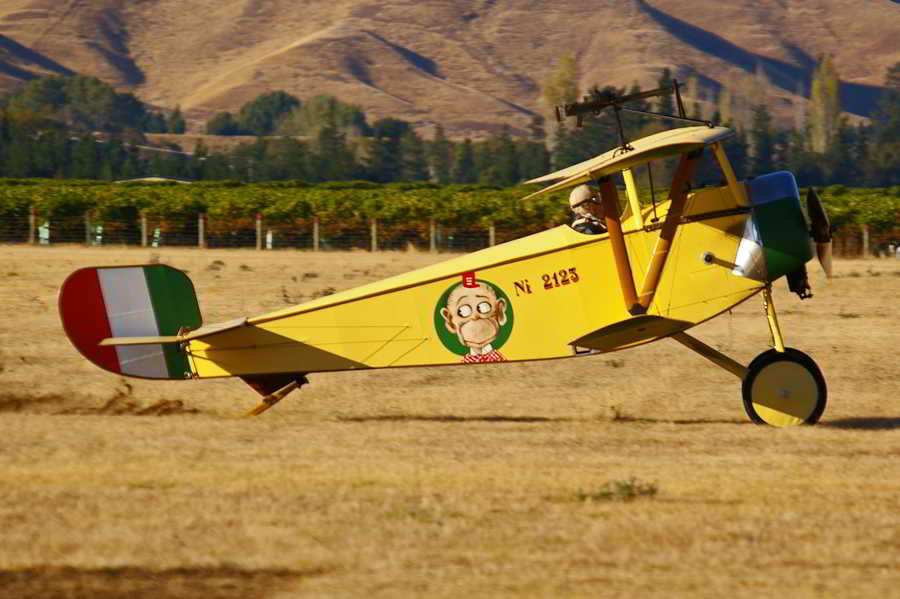
The Vintage Aviator's Nieuport 11 fighter is shown here during a display at Hood Aerodrome, Masterton, New Zealand.
Although it was eventually superseded by more advanced models like the Nieuport 17, the legacy of the Bébé endured, embodying the rapid technological advancements in aviation during the First World War and marking a pivotal moment in aerial combat history.
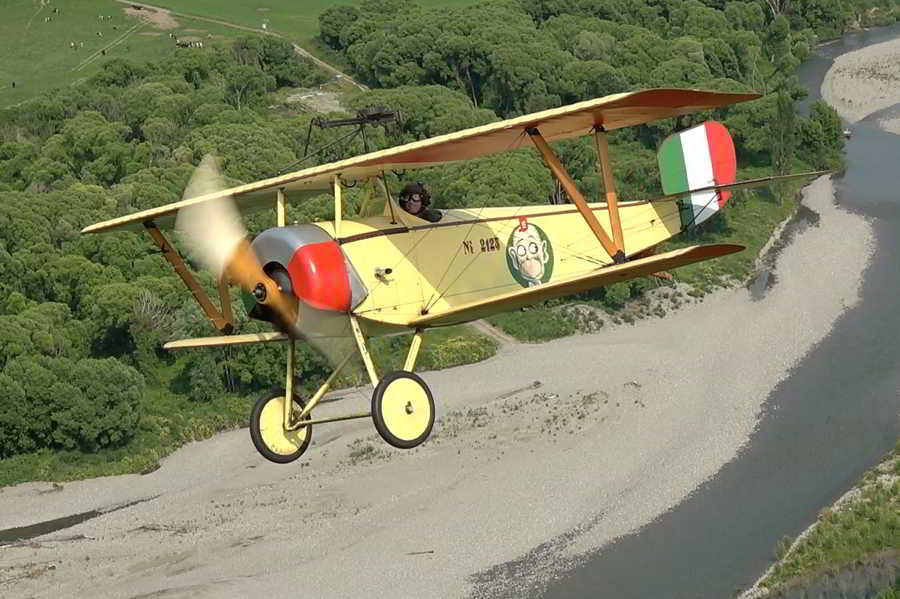
Nieuport N.11 in the air Photo: © Historical Aviation Film Unit
Assigned to the 80a Squadriglia, Italian Air Service in May 1917, N.2123 was one of the 646 N.11s built under license by the Italian company Maachi. The aircraft became the personal mount of Sgt. Alvaro Leonardi, who ended the war with a score of eight victories. The only one of those gained at the controls of Ni. 2123 was scored in May 1917, when he shot down a Ufag L1 seaplane.
The emblem on the fuselage was based on the Italian version of the 'Happy Hooligan' comic strip, in which the character was called 'Fortunello' (meaning 'Lucky').
More Videos:
Nieuport Bébé Display At Wings Over Wairarapa
Dogfight with Nieuport 11
Fokker Triplanes vs Nieuport & Camel
Nieuport Air To Air
More Photos:
Share This Page :
HMTV is our advert-free streaming video channel which features an awesome array of video and long form documentary material which is not available elsewhere. Sign up for a free trial and enjoy the significant and varied range of material we have on offer...
Please consider subscribing to HMTV, or buy us a drink to support our historical (story and film) preservation endeavours.
Copyright © All Rights Reserved — Historical Aviation Film Unit
Template by OS Templates