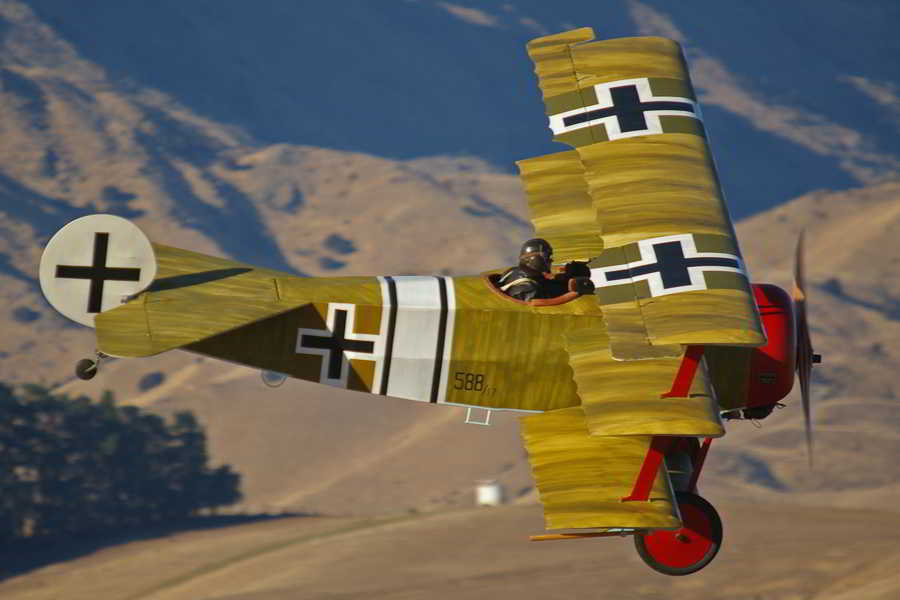
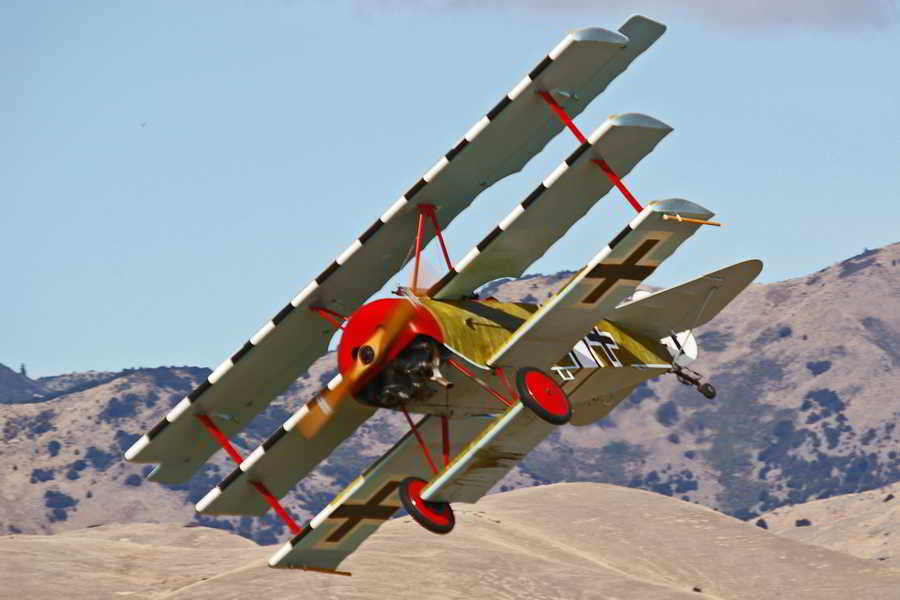
Three Fokker Dr.1 Triplanes On Patrol

-
Preserving and Recording Audio-Visual History
Although the Fokker Dr.1 was produced in limited numbers compared to other fighters of WW1 (just over 300 aircraft were built), its impact on the aerial battles of World War I was significant. The triplane design, though relatively short-lived in military aviation, demonstrated the rapid advancements in aircraft technology and tactics during the war. The Dr.1's agility and distinctive silhouette made it one of the most recognized fighter aircraft of the First World War, embodying the intense and often deadly duels that occurred in the skies over Europe. Its legacy continues to influence aircraft design and it remains a symbol of early combat aviation's daring and innovation.
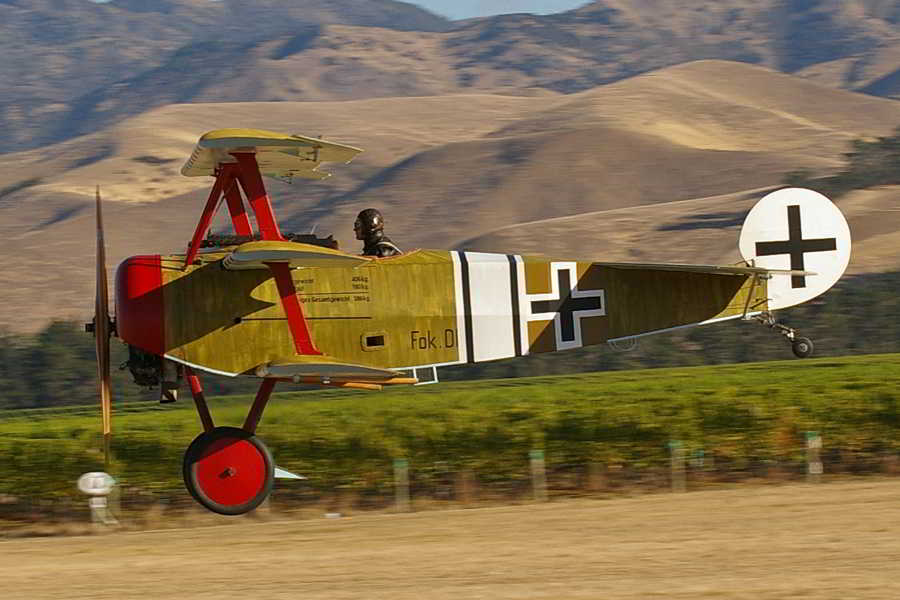
Fokker Dr.1 Triplane in the colours of 588 / 17, flown by Lt Richard Wenzl.
Photo: © Historical Aviation Film Unit
Year: 1917 Built: 320 Top Speed: 185 km/h Ceiling: 6,100m Wingspan: 7.19m Height: 2.95m Length: 5.77m Max Weight: 586kg Engine: 110hp Oberursel UR.II rotary Climb: 5.7m/s Range: 300km Armament: 2 x 7.92mm Spandau machine guns This Aircraft: Replica with a 165hp 7-cylinder air cooled Warner Scarab radial engine, built in the USA.
Lt Wenzl's aircraft marking consisted of a white and black fuselage band in the same proportions as the Iron Cross ribbon, but with the colours reversed. Additionally the leading edge of the wings were painted in alternating black and white stripes. His first two victories were in April and May 1917 while he flew with Jasta 31, but he did not have another victory (an S.E.5a) until 16th May 1918.
Some attribute this victory to Jasta 11, while others note it was scored after Wenzl had transferred to Jasta 6. He subsequently went on to survive the war with a total of twelve victories, including one balloon.
An aerial view of Wenzel's Fokker Dr.1 Triplane
Richard Wenzel was born in January 1894. Eventually joining the German military, like many pilots of the era, he started his career in another branch of the military services before transferring to the Luftstreitkräfte, the Imperial German Army Air Service.
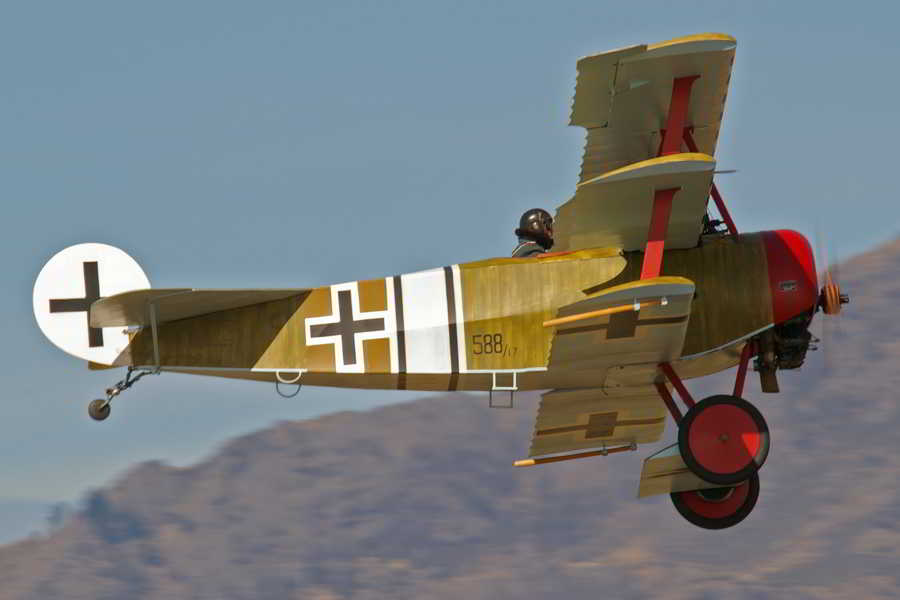
All Jasta 11 aircraft featured red cowlings, wheel covers and interplane struts. Photo: © Historical Aviation Film Unit
Wenzl was a good friend of Johann Janzen, the Commanding Officier of Jasta 6, and by personal request he was transferred to that unit in May 1918. Despite having transferred to a new unit, over the next few weeks he continued to live with his comrade Werner Steinhäuser of Jasta 11. For a short period from 11th August to the 1st Sept 1918 Wenzl was the Commanding Officer of Jasta 6.
More Videos:
Three Fokker Dr.1 Triplanes On Patrol
Seven Dr.1 Triplanes of Jasta 11
Three Fokker Triplanes Attack Bristol Fighter
RAF S.E.5a Attacks a Fokker Triplane (Short)
More Photos:
Share This Page :
HMTV is our advert-free streaming video channel which features an awesome array of video and long form documentary material which is not available elsewhere. Sign up for a free trial and enjoy the significant and varied range of material we have on offer...
Please consider subscribing to HMTV, or buy us a drink to support our historical (story and film) preservation endeavours.
Copyright © All Rights Reserved — Historical Aviation Film Unit
Template by OS Templates