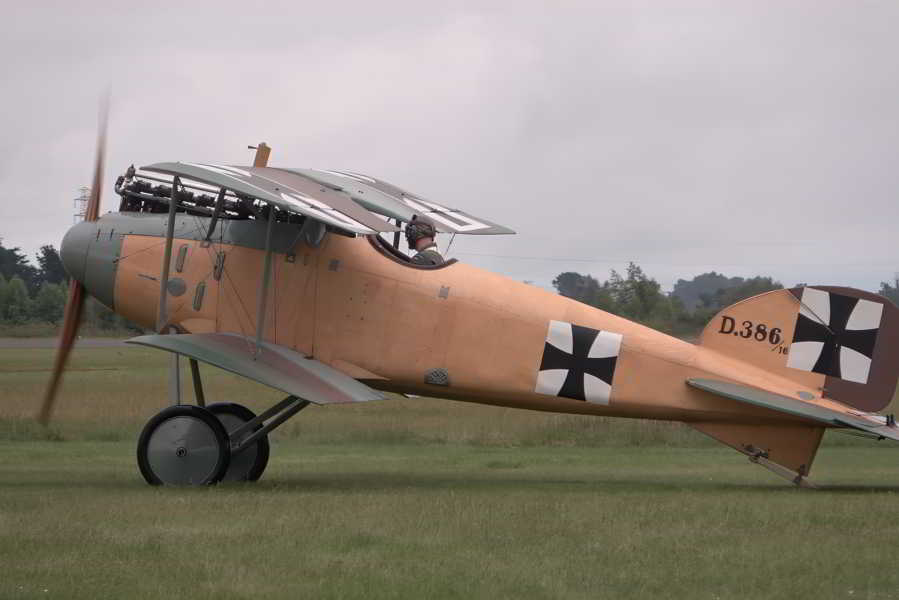
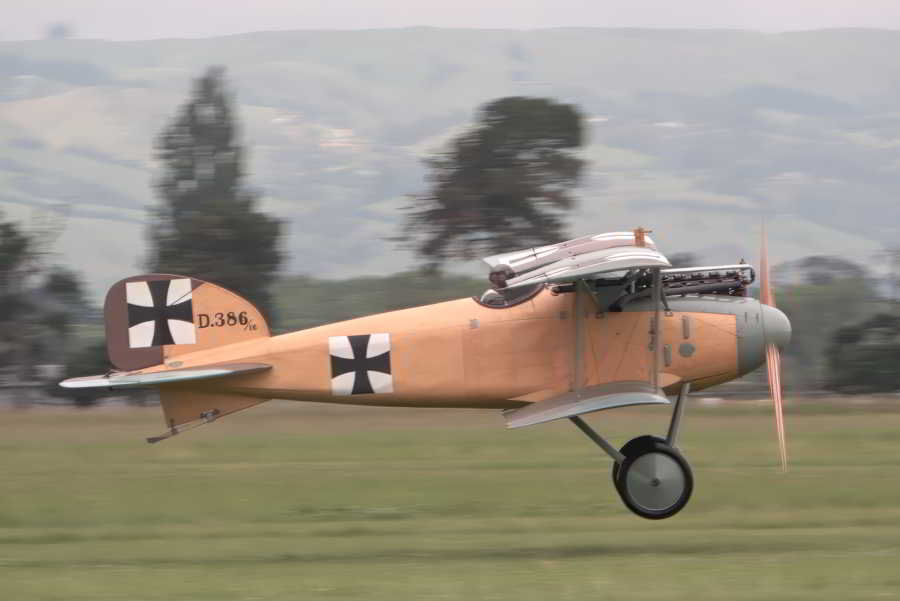
360° Video From Cockpit Of Albatros D.II

-
Preserving and Recording Audio-Visual History
Introduced in 1916, the Albatros D.II was a response to the superior Allied aircraft encountered over the Western Front, particularly the earlier models of the British Airco DH.2 and the French Nieuport fighters. The D.II was a refinement of its predecessor, the Albatros D.I, featuring a streamlined semi-monocoque fuselage made predominantly from wood and covered with a fabric skin. This design offered a blend of strength and lightness, crucial for air combat maneuverability and speed.
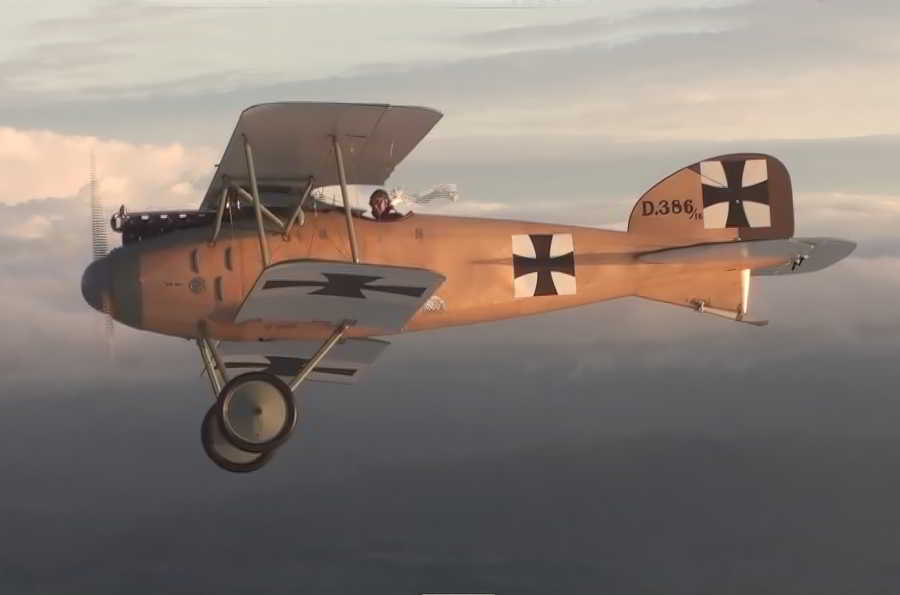
Albatros D.II in the colour sceheme of D.386/17, flown by famous German ace, Oswald Boelcke.
Photo: © Historical Aviation Film Unit
Year: 1916 Built: 291 (+ 50 D.I’s) Top Speed: 175 km/h Operational Ceiling: 5,180m Wingspan: 8.50m Height: 2.59m Length: 7.40m Max Weight: 8889kg Engine: 160hp Mercedes D.III water cooled 6 cylinder inline Climb: 3.0m/s Endurance: 90 mins Armament: 2 x 7.92mm Spandau machine guns This Aircraft: A new TVAL built reproduction with Mercedes D.III engine.
Arriving at the front in late 1916, the Albatros D.I employed a 160hp Mercedes D.III engine which was more powerful than the engines of its Halberstadt and Fokker fighter contemporaries. The type quickly began to prove its superiority over the nimble Nieuport 11 and Airco DH.2’s which had for some months been providing the Allies with a tactical advantage. While the D.I was not quite as maneuverable as the Allied fighters, the extra power of the Mercedes engine gave it the strength to carry not one, but two machine guns, giving it twice the firepower of any other aircraft at the front at that time.
Only 50 D.1s were produced before Albatros released the improved D.II. Nearly 300 of the D.II were built—early versions had large ‘ear-like’ radiators on either side of the fuselage, but to avoid engine failures due to battle damage (and a subsequent loss of engine coolant) these were replaced in the later models with an airfoil shaped radiator on the upper wing surface (as seen on this aircraft). In August 1916, the Eindecker ace Oswald Boelcke (19 victories) was given command of Jasta 2. The following month the unit received five new Albatros D.I’s and a single D.II which Boelcke claimed as his own.
One of the most notable improvements in the Albatros D.II design was the revised placement of the upper wing. It was lowered and positioned closer to the fuselage, improving the pilot's field of vision, which was a significant tactical advantage in aerial combat. This adjustment, along with its robust construction and effective armament, made the D.II a dominant force in the skies.
Three German Albatros biplane fighters (a D.II and two D.Va's) 'over the front'...
During a dogfight in October Boelcke (then with 40 victories) and fellow pilot Erwin Böhme lost sight of one another, and the wheels of Böhme’s aircraft lightly collided with the top wing of Boelcke’s D.II. Boelcke’s aircraft rapidly lost altitude and subsequently crash landed. The ace would have likely survived the impact of the landing had it not been for his habit of not wearing his lap belt while flying. A simple blow to the head during the crash killed Germany’s pre-eminent fighter ace of the day.
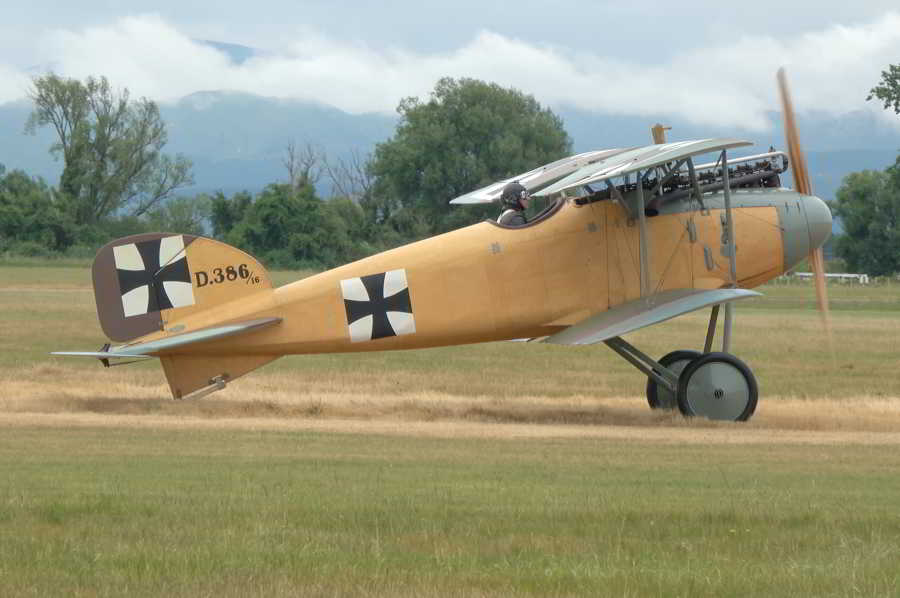
The Albatros D.II taxis in after a display practice Photo: © Historical Aviation Film Unit
Although it was eventually superseded by more advanced designs like the Albatros D.III and D.V, the D.II’s contributions to aerial warfare during its service were substantial. Its legacy is remembered as a step forward in the evolution of fighter aircraft, reflecting the rapid advancements in aviation technology and tactics during the First World War.
More Videos:
360° Video From Cockpit Of Albatros D.II
More Photos:
Share This Page :
HMTV is our advert-free streaming video channel which features an awesome array of video and long form documentary material which is not available elsewhere. Sign up for a free trial and enjoy the significant and varied range of material we have on offer...
Please consider subscribing to HMTV, or buy us a drink to support our historical (story and film) preservation endeavours.
Copyright © All Rights Reserved — Historical Aviation Film Unit
Template by OS Templates