Two Fokkers On Patrol At Dusk

-
Preserving and Recording Audio-Visual History
The Fokker D.VIII, originally designated as the Fokker E.V, is a notable fighter aircraft that emerged towards the end of World War I, showcasing significant advancements in aviation technology of the time. Developed by the renowned Dutch aircraft designer Anthony Fokker, the D.VIII made its first flight in early 1918. Distinctive for its monoplane design, a departure from the biplane and triplane designs that dominated the era, the D.VIII combined innovative engineering with exceptional performance. Its sleek, cantilever wing design eliminated the need for external bracing wires and struts, resulting in a cleaner, more aerodynamic profile which enhanced its speed and maneuverability.
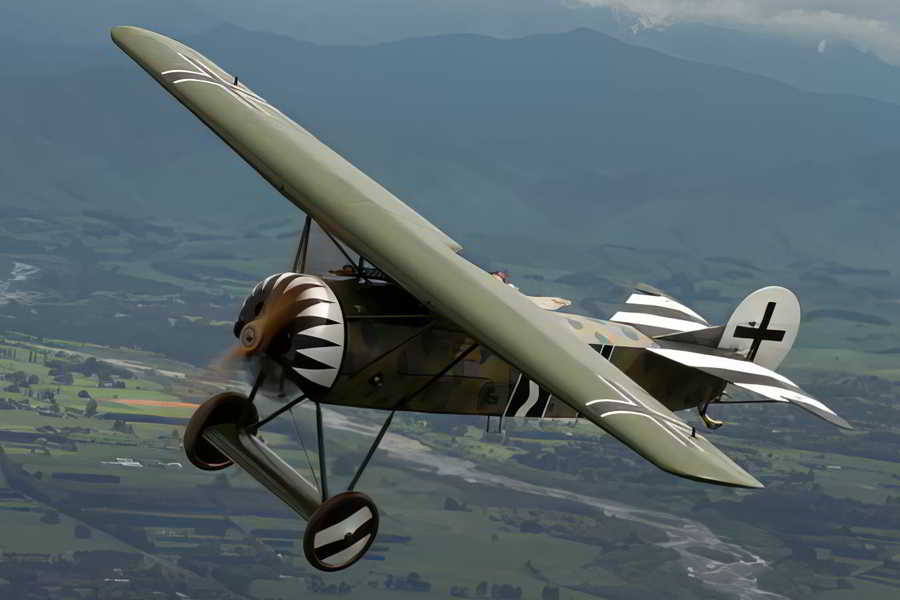
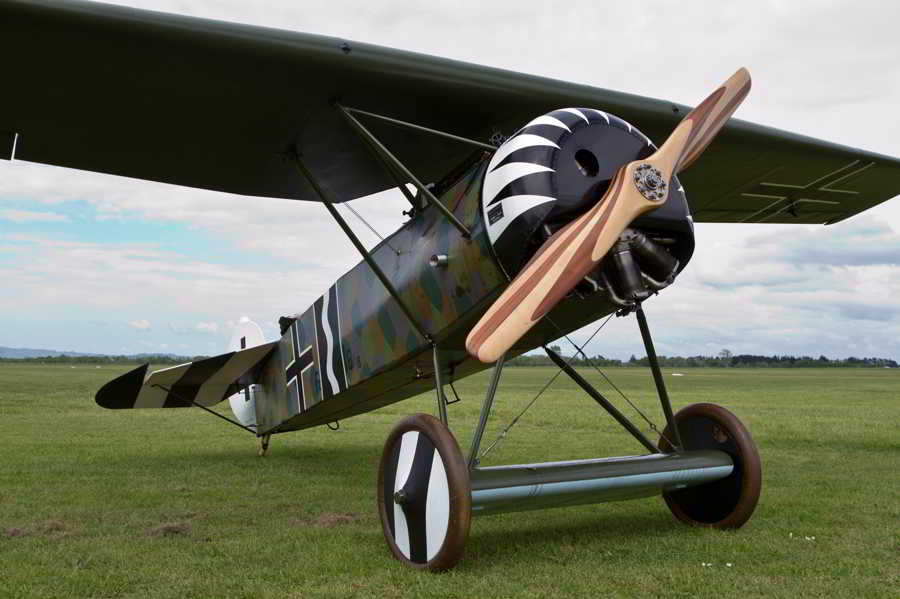
Fokker D.VIII in a known colour scheme. It is not known which pilot flew this aircraft.
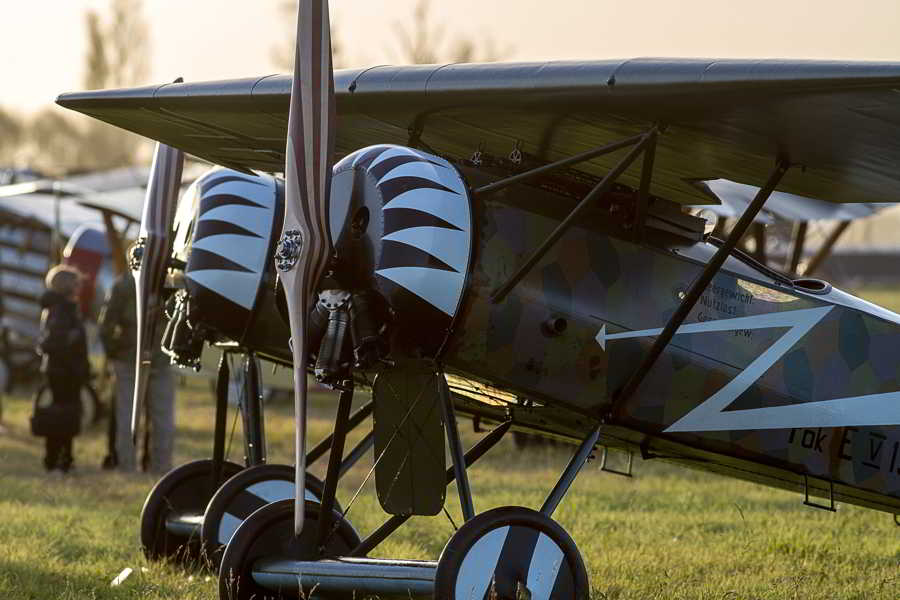
Photo: © Historical Aviation Film Unit
Year: 1918 Built: approx 380 Top Speed: 204 km/h Ceiling: 6,000m Wingspan: 8.34m Height: 2.6m Length: 5.86m Max Weight: 605kg Engine: Oberursel UR.II 9-cyl. air-cooled rotary engine Climb: 8.33m/s Endurance: 90 mins Armament: 2 x 7.92mm Spandau machine guns This Aircraft: A new TVAL built reproduction with an Oberursel UR.II engine reproduction also built by TVAL.
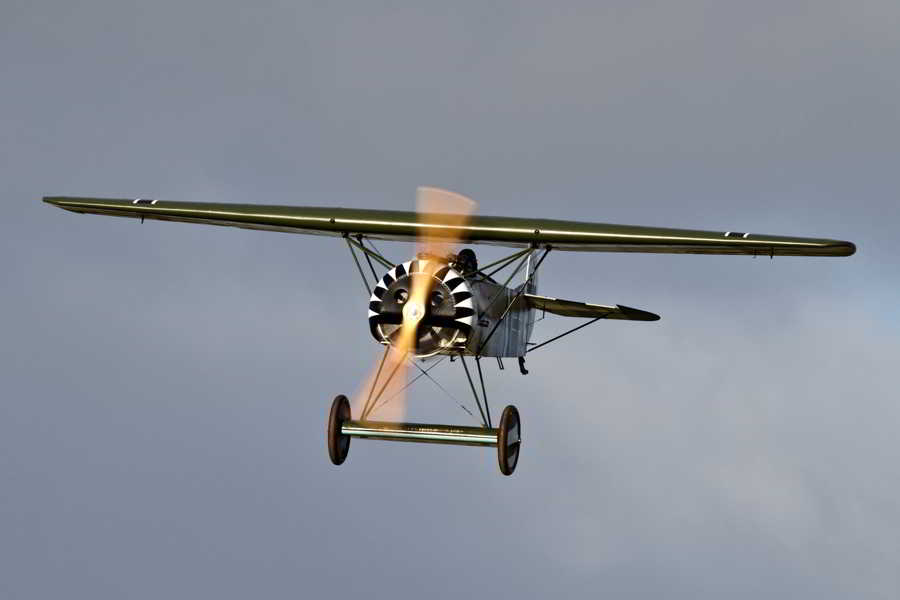
One of the key features of the Fokker D.VIII is its parasol wing, mounted above the fuselage on a set of cabane struts. This design provided the pilot with an unobstructed field of vision, a significant tactical advantage in the dogfighting scenarios of the day. Additionally, the wing's thick airfoil shape allowed for greater lift and stability, which, combined with the aircraft’s overall lightweight construction, contributed to its nimble handling characteristics. The D.VIII's design represented a significant step forward in aerodynamic efficiency and would influence future aircraft designs.
Despite its advanced design and superior performance, the Fokker D.VIII's impact on World War I was limited by its late entry into the conflict. Only a small number were in service before the war ended in November 1918. However, its brief operational history was marked by success, with pilots praising its handling and effectiveness in combat. The Fokker D.VIII’s legacy lies in its innovative design, which bridged the gap between the aircraft of World War I and the more advanced designs that would follow in the years after the war. Its development marked a pivotal moment in the evolution of fighter aircraft, showcasing the potential of monoplane configurations in military aviation.
In April 1917 the USA declared war on Germany, and by the middle of the year American forces began to arrive in France in significant numbers. With another new and powerful adversary to contend with, the German air service developed the Amerika Program which essentially called for a doubling of its output of aircraft, aero engines, machine guns and fuel. Additionally, by the second half of 1917 German units were facing severe competition in the air from the new technically superior breed of Allied fighters—the R.A.F S.E.5a, the Sopwith Camel, and the Bristol Fighter F.2b amongst others. Manfred von Richthofen was highly critical of the Albatros fighters that were the mainstay of the German air service at the time, and suggested that a competition should be held to encourage the development of new improved fighters.
Was The Fokker D.VIII The Best German Fighter Aircraft Of WW1?
The first of the aircraft competitions was held in late January 1918, with the result that the highly acclaimed Fokker D.VII was put into immediate production. This process was so successful that another competition was held in May in which another Fokker aircraft, the parasol-winged D.VIII was selected as the winner. Entering service as the Fokker E.V (for Eindecker i.e. monoplane) in August 1918 the type only saw brief service before being withdrawn due to several structural failures. Remedial work was carried out, and by the time it was reintroduced in October the type had been renamed as the D.VIII as the ‘E’ designations were no longer being used.
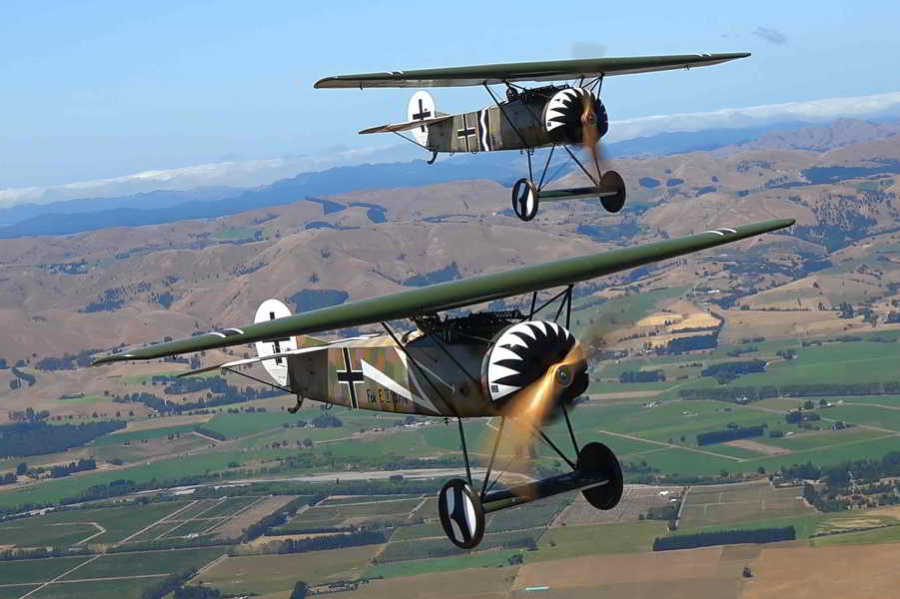
Two rotary-powered Fokker D.VIII's together -- this is a rare sight. Photo: © Historical Aviation Film Unit
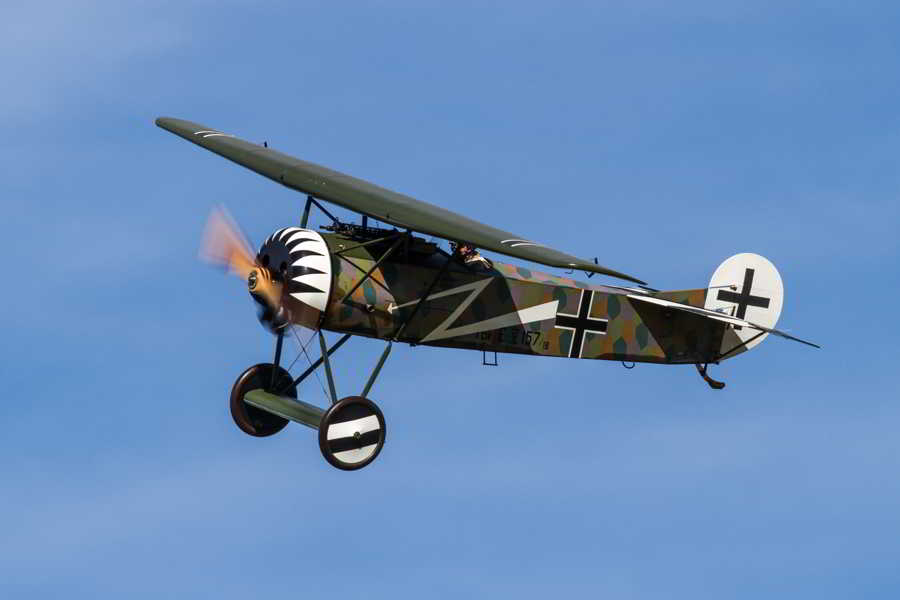
This aircraft is finished in the colour scheme of one of the early E.V examples initially allocated to Jasta 6 in August 1918.
More Videos:
Two Fokkers On Patrol At Dusk
The D.VIII, or 'The Flying Razor' (Short)
More Photos:
Share This Page :
HMTV is our advert-free streaming video channel which features an awesome array of video and long form documentary material which is not available elsewhere. Sign up for a free trial and enjoy the significant and varied range of material we have on offer...
Please consider subscribing to HMTV, or buy us a drink to support our historical (story and film) preservation endeavours.
Copyright © All Rights Reserved — Historical Aviation Film Unit
Template by OS Templates