Coming Soon

-
Preserving and Recording Audio-Visual History
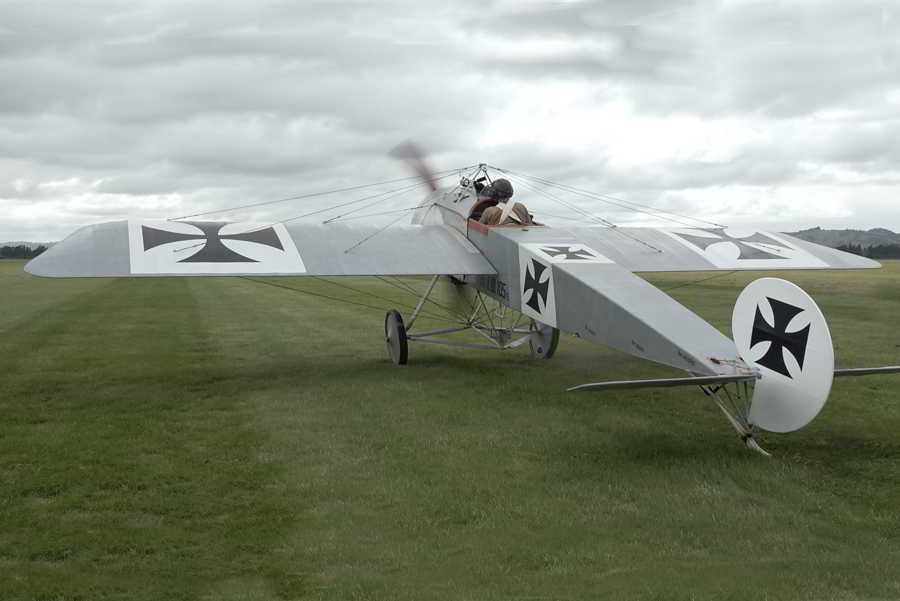
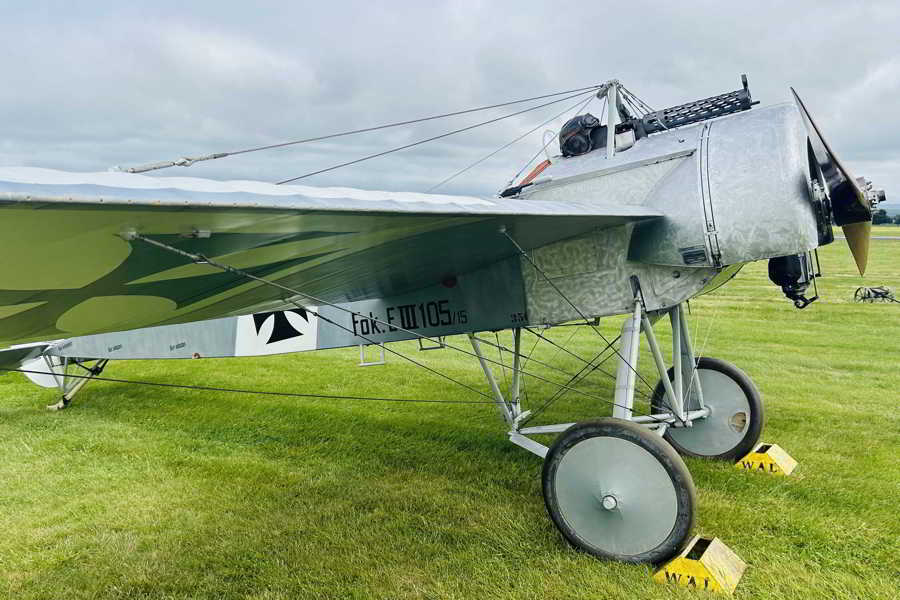
The Fokker E.III Eindecker, a seminal aircraft in the history of military aviation, was the primary variant of the groundbreaking Eindecker (meaning "monoplane" in German) series built by Fokker during World War I. As the most numerous of the Eindecker fighters, the E.III played a pivotal role in establishing air superiority for Germany during the early stages of the conflict. Introduced into service in late 1915, it was a development of the earlier E.I and E.II models and represented a significant technological advancement in fighter aircraft design.
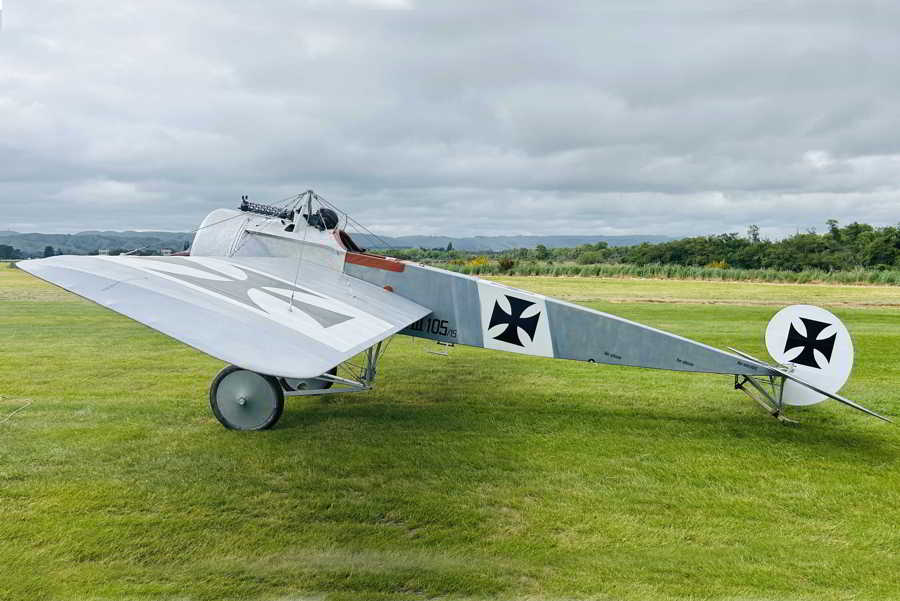
This is currently the only full-size Eindecker aircraft in the world that's airworthy.
Photo: © Historical Aviation Film Unit
Year: 1915 Built: 416 Top Speed: 140 km/h Ceiling: 3,600m Wingspan: 9.52m Height: 2.4m Length: 7.2m Max Weight: 610kg Engine: 1 × Oberursel U.I 9-cylinder air-cooled rotary Climb: 3.33m/s Endurance: 150 min Range: 198km Armament: 1 x 7.92mm Spandau machine guns This Aircraft: A new TVAL-Built full scale reproduction powered by a 100hp Gnome rotary engine
The Fokker E.III's most notable feature was its synchronization gear, which allowed the pilot to fire a machine gun through the propeller arc without striking the blades. This innovation, pioneered by Anthony Fokker, dramatically changed aerial combat, giving pilots the ability to aim their entire aircraft at the enemy, rather than relying on less effective wing-mounted or flexible guns. The E.III was equipped with a single 7.92 mm Parabellum MG14 machine gun, which, in combination with the synchronization gear, made it a formidable adversary in the skies.
Powered by an Oberursel U.I rotary engine, a German copy of the French Gnome Monosoupape, the E.III delivered about 100 horsepower. This engine was reliable and powered the aircraft to a maximum speed of around 87 mph (140 km/h), with a service ceiling of approximately 11,500 feet (3,500 meters). Its monoplane design, with a single wing mounted low on the fuselage, gave the E.III a lower drag coefficient than the biplanes of its adversaries, contributing to its relative agility and speed.
The design of the Fokker E.III focused on simplicity and durability. Its fuselage was a welded steel tube frame, covered in fabric, and the wings were braced by a single pair of interplane struts on each side, creating a rugged and maintainable structure. This robust construction allowed the E.III to withstand considerable damage in combat, an essential quality for frontline aircraft.
Watch as a World War One rotary-engined Fokker Eindecker monoplane fighter takes to the skies just as its brethren did over 108 years ago.
In combat, the Fokker E.III was initially highly successful, dominating the skies over the Western Front. This period, known as the "Fokker Scourge" saw Allied aircraft outclassed by the E.III's superior firepower and maneuverability. The psychological impact of the Fokker's dominance was significant, contributing to a shift in military aviation tactics and design.
However, the supremacy of the Fokker E.III was not to last. By mid-1916, the introduction of new Allied aircraft, such as the Nieuport 11 and the Airco DH.2, with better speed, armament, and maneuverability, eroded the E.III's advantages. Despite being eclipsed by these newer designs, the Fokker E.III's impact on aerial warfare was profound. It marked the transition from the early reconnaissance and observation role of aircraft to the more aggressive fighter role, setting the stage for future developments in military aviation.
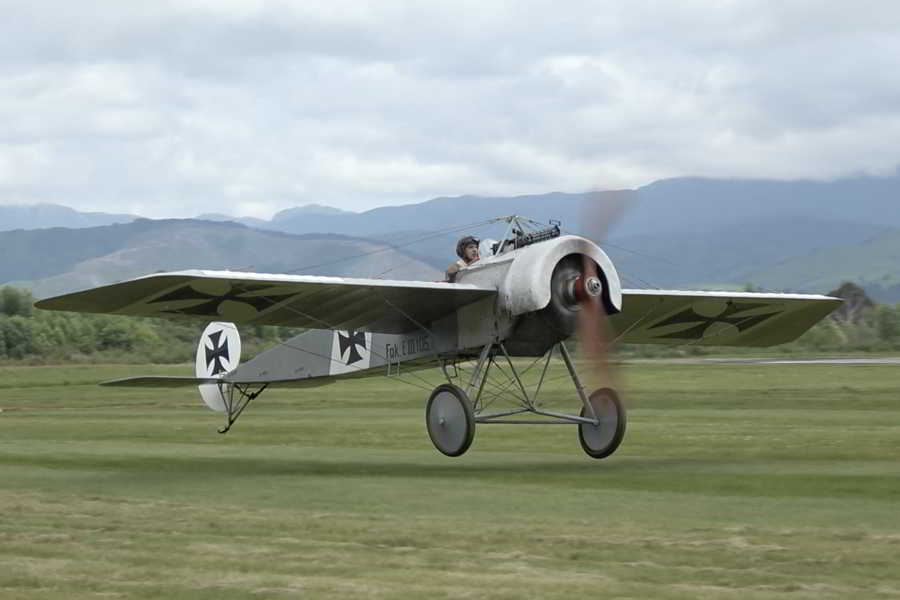
The Eindecker has a suprisingly short take-off run. Photo: © Historical Aviation Film Unit
Oswald Boelcke, one of the most influential and respected fighter pilots of World War I, is intrinsically linked with the Fokker E.III Eindecker, an aircraft that played a crucial role in his early combat successes. Boelcke, a German ace, is often regarded as the father of modern air combat tactics, and his exploits in the Fokker E.III significantly contributed to his legendary status. The Fokker E.III, with its innovative synchronization gear that allowed the pilot to fire through the propeller arc, provided Boelcke with a technological edge that he skillfully exploited. His mastery of the aircraft was evident in his ability to use its strengths—such as superior firepower and good maneuverability—to outfight the Allied aircraft of the period.
Boelcke's tactical prowess in the Fokker E.III was not just about individual dogfights; he formulated and practiced the principles of aerial combat that would become the foundation for future fighter tactics. He emphasized the importance of surprise, the use of the sun and clouds for cover, and the advantages of attacking from a higher altitude. His strategies were crystallized in the "Dicta Boelcke," a set of combat guidelines that remained influential long after his death. Flying the Fokker E.III, Boelcke demonstrated these tactics with remarkable effectiveness, scoring numerous victories and instilling a sense of discipline and tactical awareness in his fellow pilots. His success in the Eindecker established him as one of the foremost aces of the war and paved the way for the next generation of fighter aircraft and pilots.
More Videos:
Coming Soon
Coming Soon
More Photos:
Share This Page :
HMTV is our advert-free streaming video channel which features an awesome array of video and long form documentary material which is not available elsewhere. Sign up for a free trial and enjoy the significant and varied range of material we have on offer...
Please consider subscribing to HMTV, or buy us a drink to support our historical (story and film) preservation endeavours.
Copyright © All Rights Reserved — Historical Aviation Film Unit
Template by OS Templates