Hallet Griffin At The Mosquito Launch Spectacular

-
Preserving and Recording Audio-Visual History
The DHC-2 Beaver is a single-engine, high-wing, aircraft renowned for its durability and versatility. Designed and produced by de Havilland Canada, the DHC-2 was primarily developed as a bush plane, capable of operating in rugged environments and from unimproved surfaces, including water when fitted with floats. First flown in 1947, the Beaver was an immediate success, finding a ready market in remote and undeveloped areas of the world where its sturdiness and reliability were in high demand.
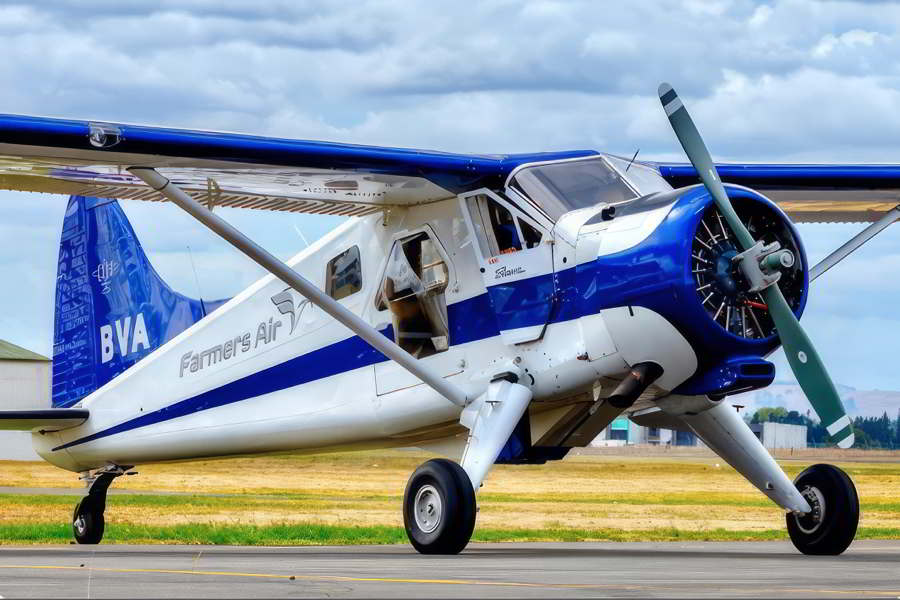
Following a restoration and upgrade project, ZK-BVA also sports a new colour scheme.
Photo: © Supplied By Wings Over Wairarapa
Year: 1947 Built: 1,657 Registration: ZK-BVA Wingspan: 14.63m Height: 2.74m Length: 9.22m Max Weight: 2,313kg Engine: 450 hp (340 kW) Pratt & Whitney R-985 Wasp Junior radial Max Speed: 255km/h Cruise Speed: 230km/h Climb: 5.2 m/s Ceiling: 5,500m Range: 732km
The design of the DHC-2 Beaver was a response to the needs of operators in Canada's vast and challenging terrain. It was built to be robust and simple to maintain, with a high-lift wing and powerful engine, enabling it to take off and land in short distances, a crucial feature for flights in and out of impromptu airstrips. The aircraft's versatility was further enhanced by its ability to be equipped with wheels, skis, or floats, allowing it to operate in a variety of environments, including snow, water, and rough terrain. This adaptability made the Beaver particularly popular among operators in remote areas, including those involved in forestry, mineral exploration, and hunting.
The Beaver holds a special place in New Zealand's aviation heritage, particularly in Gisborne. Lawson Field founded Fieldair Ltd at Gisborne in 1951, and over the years, they operated a fleet of nineteen Beavers. The first of these, ZK-AZB, graced the skies from 1952 until retirement in 1983, and it now resides with Hallett Griffin as part of his topdressing aircraft collection (see the video below). The last Fieldair Beaver was retired around 1988.
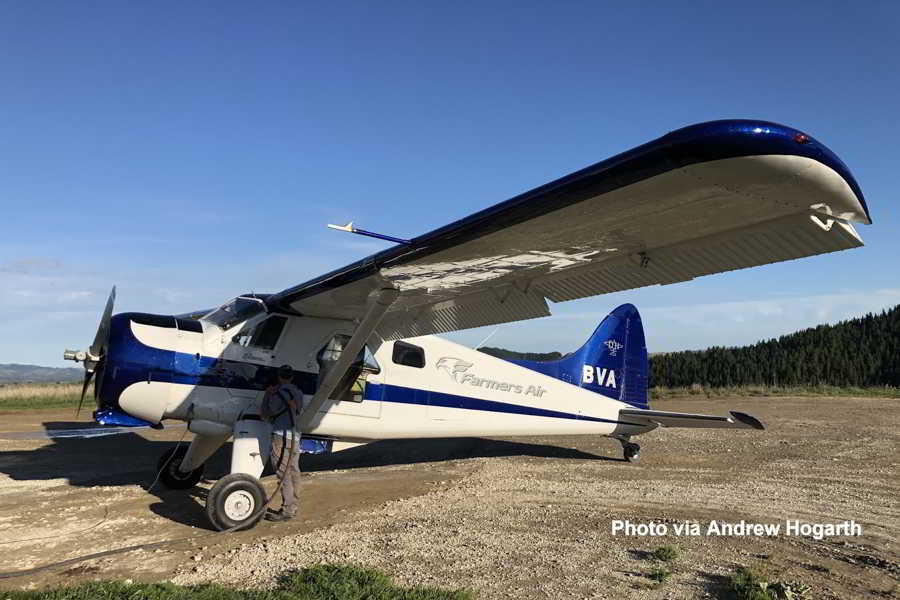
However, this 1952 de Havilland Canada Beaver DHC-2 was introduced to Farmers Air's fleet in 2018 as a training aircraft, to future-proof the company's pilot requirements and allow training to happen without tying up one of their high production Falco XL aircraft. With its high-lift wings and dual controls the Beaver is perfectly fit for those training purposes.
Hallet Griffen displays his Beaver at the Royal New Zealand Air Force's 75th Anniversary show at Ohakea.
Farmers Air imported this Beaver and registered it as ZK-BVA (the second use of this registration -- the first ZK-BVA belonged to a Fletcher that crashed near Te Kuiti in 1972). This "new" Beaver began its life with the US Army in 1952, as an L-20A military variant, but it was later civilianized onto the US register in 1989, and then found its way to Australia in 1992 as VH-BVA. During its time, it had several owners and even operated on floats. By October 2016 it had flown a relatively low 12,900 hours for a 64-year-old aircraft. Following a comprehensive rebuild, it embarked on a journey across the Tasman via Lord Howe Island in January 2019.
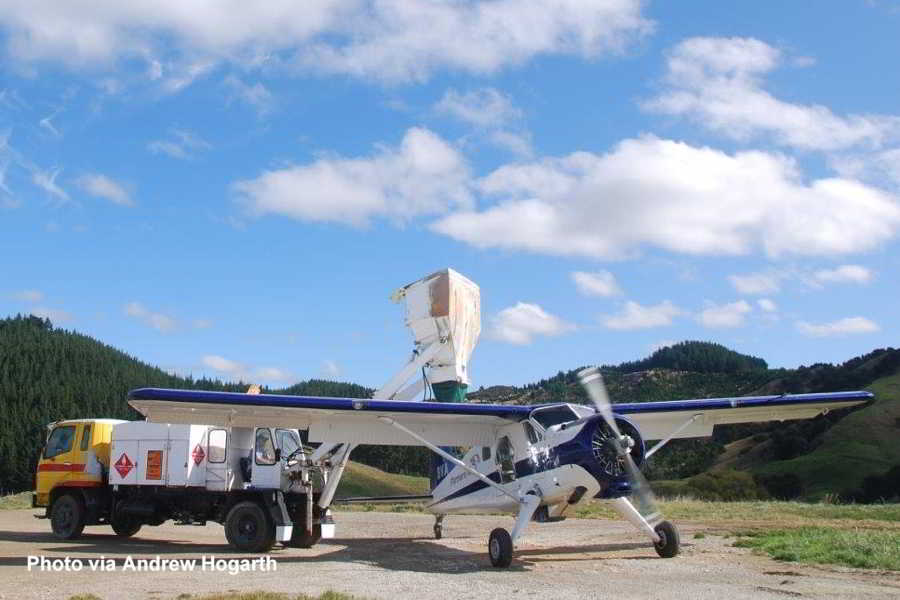
In preparation for the new training role, the aircraft was sent to West Aero at Mercer for the installation of a hopper which had been sourced from the Jim Frogley Beaver, ZK-BBX, the last topdressing Beaver in New Zealand before being retired in 2017. After the hopper was installed, the Beaver received a complete makeover at Hamilton Aero Maintenance, and she now sports a classic Beaver colour scheme that harks back to the hey day of the type.
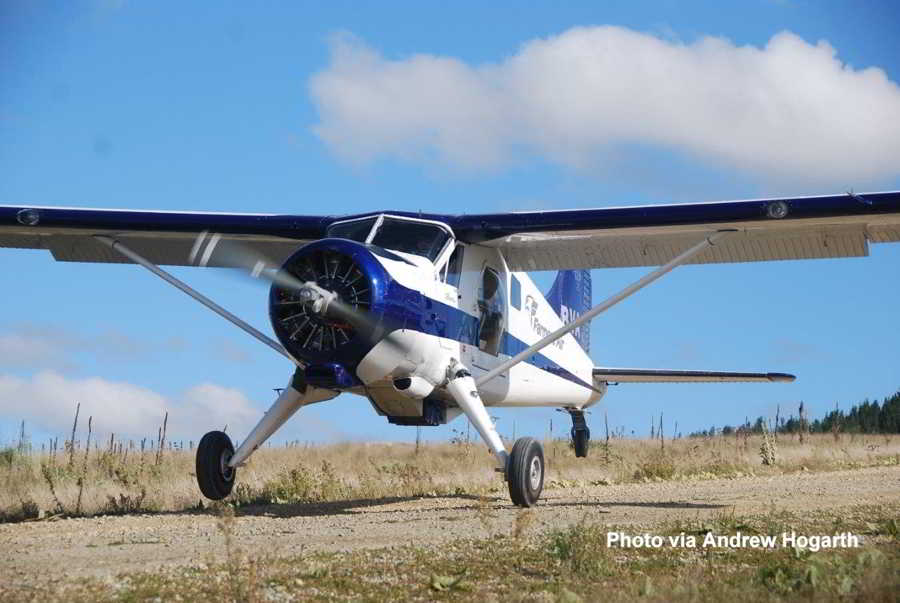
The Beaver is capable of operating from rough airstrips, even with heavy loads. Photo: © Andrew Hogarth
After the restoration project, the Beaver embarked on its first topdressing mission at Tangihanga Station near Gisbourne on April 11, 2020. Chief Pilot and owner of Farmers Air, Andrew Hogarth, had piloted the aircraft and reported that she performed brilliantly. Andrew envisions the Beaver as an invaluable addition to his fleet, offering a perfect platform for teaching agricultural pilot skills before transitioning to the Falco turbine aircraft, setting a course for a bright future in New Zealand's agricultural aviation industry.
Like many aircraft operators, Farmers Air face the ongoing struggle of sourcing pilots. With the Beaver on board they were able to establish an agricultural pilot cadetship, providing an effective pathway for budding agricultural aviators. Cadets, sourced through partnerships with local High Schools, farming community and flight schools are able to develop their skillset on the Beaver before flying the company’s Falco XL.
More Videos:
Hallet Griffin At The Mosquito Launch Spectacular
Beaver At Wings Over Wairarap Airshow
Beaver In RNZAF Antartic colours
More Photos:
Share This Page :
HMTV is our advert-free streaming video channel which features an awesome array of video and long form documentary material which is not available elsewhere. Sign up for a free trial and enjoy the significant and varied range of material we have on offer...
Please consider subscribing to HMTV, or buy us a drink to support our historical (story and film) preservation endeavours.
Copyright © All Rights Reserved — Historical Aviation Film Unit
Template by OS Templates