Air To Air Video Of The Chipmunk

-
Preserving and Recording Audio-Visual History
The DHC-1 Chipmunk, marked a significant advancement in trainer aircraft design following the Second World War. Developed by the famed de Havilland Aircraft Company, it first took to the skies in 1946, embodying the technological progress of its era. This two-seat, single-engine monoplane was primarily used for training purposes, rapidly gaining popularity for its reliability and performance. Its design features a fabric-covered fuselage and tail, with metal wings and a distinctive, clear canopy that offers excellent visibility. The Chipmunk served numerous air forces globally, including the Royal Air Force, and remains a beloved choice among vintage aircraft enthusiasts for its classic design and spirited flying characteristics.
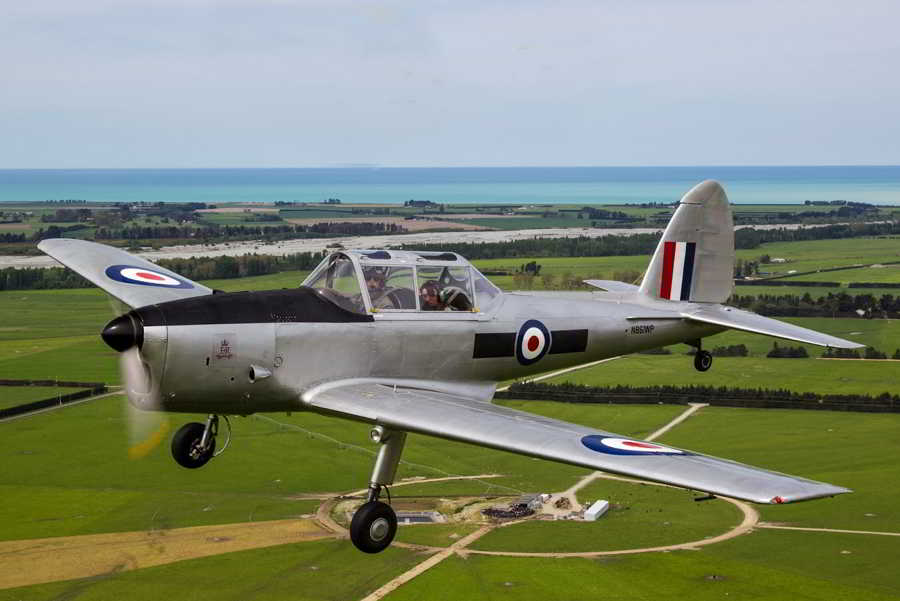
Current owner, Bevan Dewes, at the controls of the 'Chippy' over the South Canterbury countryside.
Photo: © Historical Aviation Film Unit
Year: 1946 Built: 1,284 Top Speed: 222 km/h (138 m/h) at sea level Cruise Speed: 166 km/h (103 m/h) Wingspan: 10.46m (34' 4") Height: 2.16m (7' 1") Length: 7.75m (25' 5") Max Weight: 659kg Engine: 130hp Clerget 9b rotary Climb: 4.6m/s (900 feet/min) Ceiling: 4,800km (15,800ft) Range: 417km (259 mi)
The type was developed by de Havilland (Canada) Ltd, to replace the aging Tiger Moth which had been used to train British Commonwealth pilots since 1931. The Chipmunk proved more than equal to the task and was immediately adopted as the standard primary trainer for both the Royal Air Force and the Royal Canadian Air Force. Such was the success of the type that the RAF continued to use the type until the late 1990s, a record service left for any type with the RAF.
Built in England in mid 1952 this de Havilland Chipmunk was first based at White Waltham Airfield on the west side of London, which conveniently was the closest airfield to Windsor Castle, this it became one of two Chipmunks used for the initial flight training of HRH Prince Philip. In fact this aircraft was the first aircraft Prince Philip flew, and was the one in which he conducted his primary stage flight test. WP861 was then used by various units and University Air Squadrons before being demobbed from the RAF in the early 1970s. It initially found a new owner in the USA before being imported to New Zealand in 2004.
The Chipmunk was the first de Havilland aircraft with an all-metal wing structure and a fabric-covered fuselage. This design provided an excellent balance between durability and performance, making it a significant improvement over its wooden-framed predecessors.
Follow and support this Chipmunk "at the Legend Aviation website."
Owener and pilot Bevan Dewes talks about his Chipmunk and its history
For many years only a handful of Chipmunks flew in New Zealand however during the 1990s that number more than doubled with additional examples coming from South Africa, England and India, adding a dozen more, very welcome Chipmunks to the Kiwi scene.
From the pilot's perspective, the Chipmunk is famous for its beautifully harmonised flight controls, light control forces and docile handling in aerobatics. If ever the was an aircraft that could live up to the oft heard expression "It's a delight to fly", it surely is the de Havilland Chipmunk.
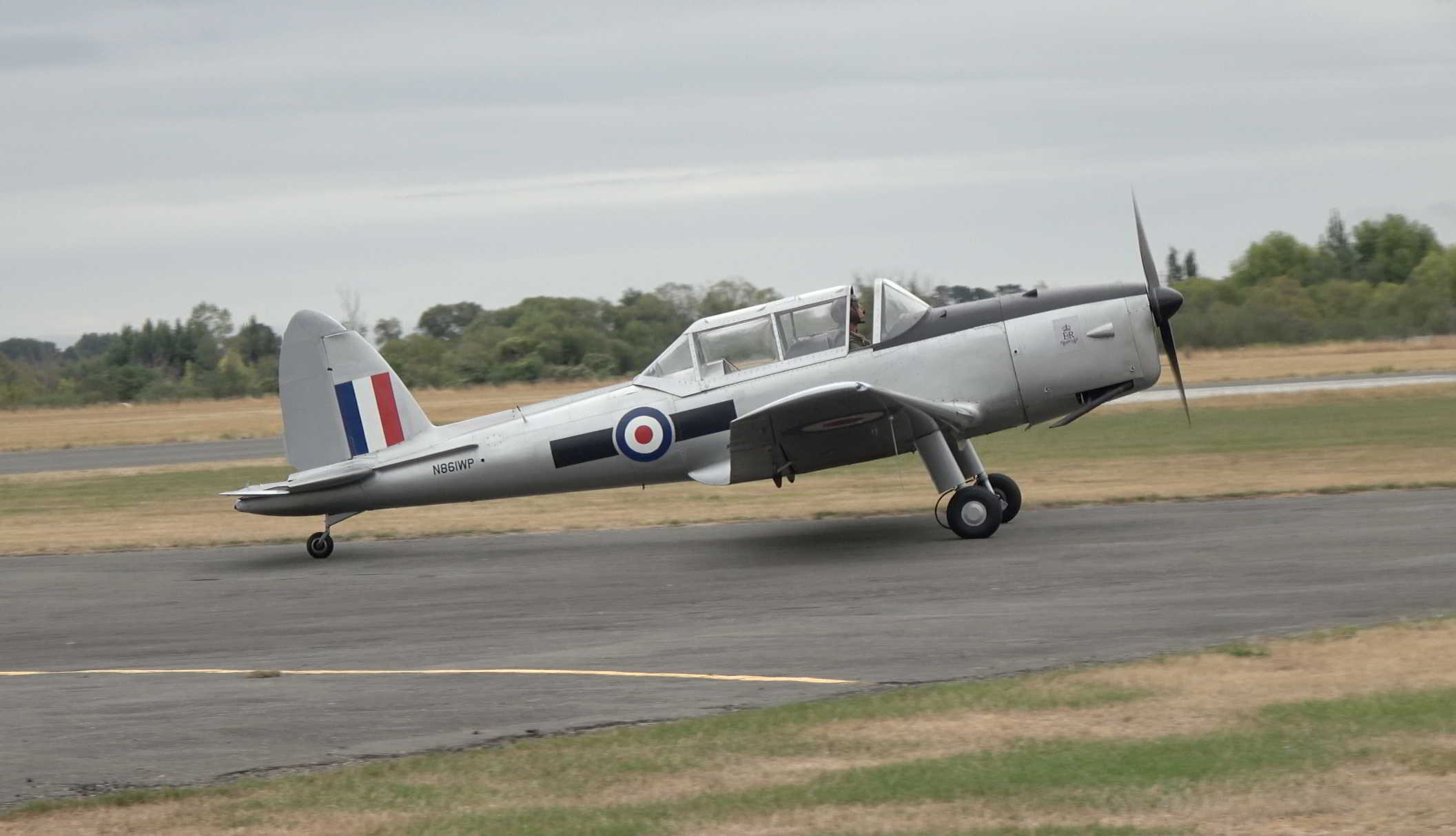
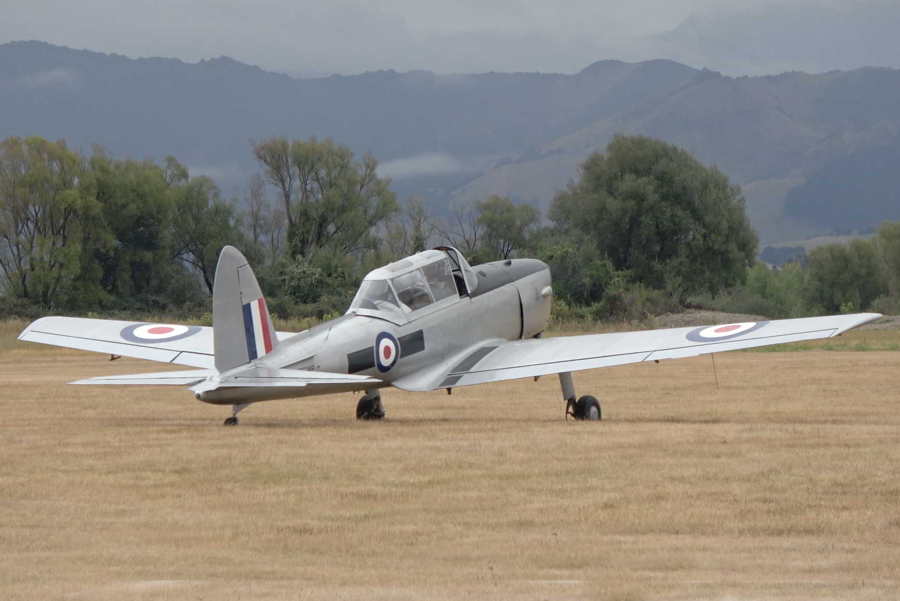
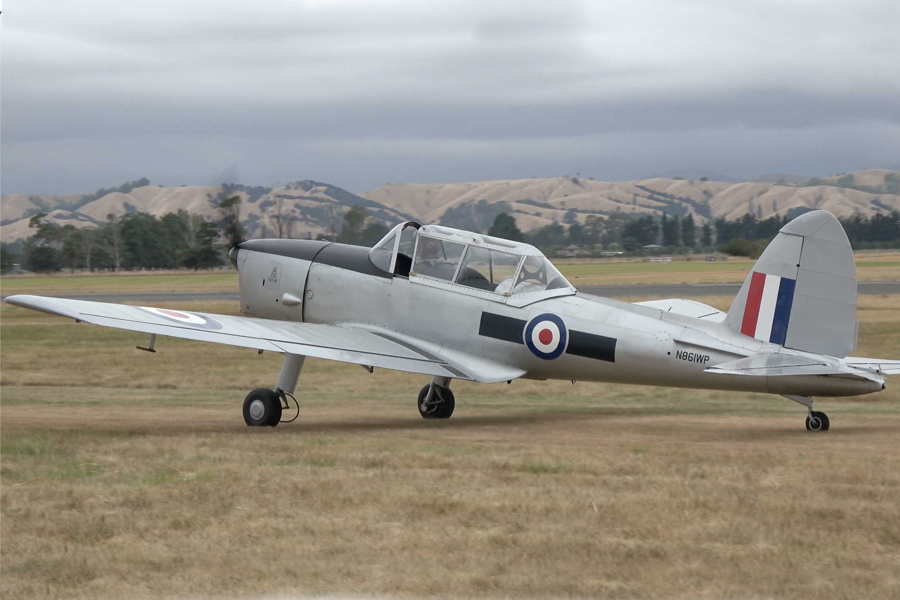
WP861 at its base at Hood Aerodrome. Photo: © Historical Aviation Film Unit
One fascinating true story about the de Havilland Chipmunk involves its role in the Cold War espionage. During the 1950s, a Chipmunk aircraft, operated by the British Royal Air Force, was secretly modified for intelligence missions over East Germany.
This particular Chipmunk was equipped with high-resolution cameras for aerial photography. Its missions were to fly along the border between West and East Germany, taking detailed photographs of Soviet military installations and troop movements in the East. The Chipmunk's unassuming appearance as a training aircraft allowed it to undertake these missions with a degree of stealth, as it didn't arouse the same level of suspicion as a military or reconnaissance plane might have.
On several occasions, the Chipmunk ventured into highly restricted airspace, risking engagement by Soviet forces. The pilots who flew these missions were highly skilled, as they had to navigate carefully to avoid detection, and often flew at low altitudes to capture the needed imagery.
The intelligence gathered by these flights provided valuable insights into Soviet military capabilities and deployments during a tense period of the Cold War. It's a testament to the versatility and capability of the Chipmunk that it could be adapted from a basic trainer to a tool of espionage in one of the most critical periods of modern history.
More Videos:
Air To Air Video Of The Chipmunk
Chipmunk Aerobatics In Prince Philips' Aircraft
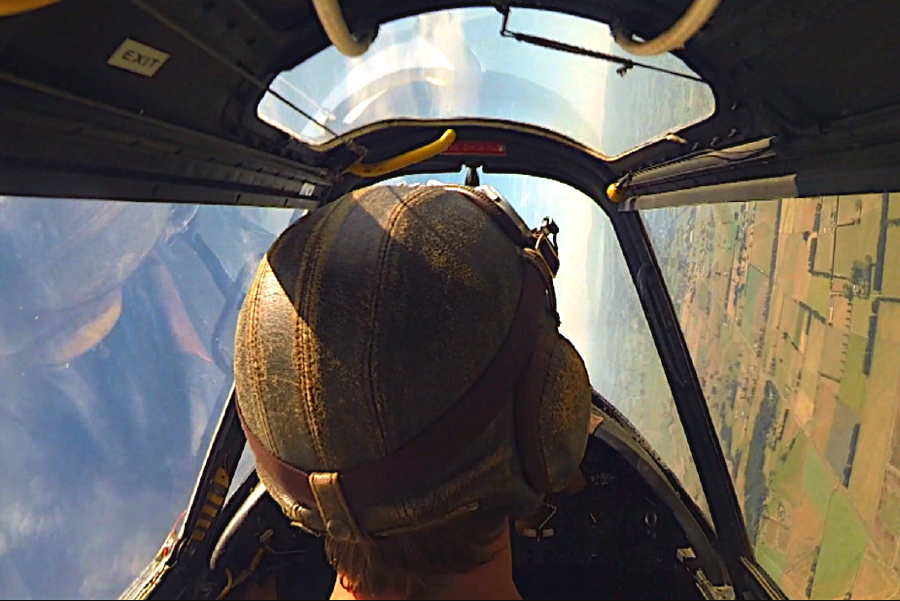
In Cockpit During Aerobatics Routine
Several de Havilland Canada DHC-1 Chipmunks
More Photos:
Share This Page :
HMTV is our advert-free streaming video channel which features an awesome array of video and long form documentary material which is not available elsewhere. Sign up for a free trial and enjoy the significant and varied range of material we have on offer...
Please consider subscribing to HMTV, or buy us a drink to support our historical (story and film) preservation endeavours.
Copyright © All Rights Reserved — Historical Aviation Film Unit
Template by OS Templates